-
News & Events


The sound and sustainable development of the healthcare industry is fundamentally tied to people’s livelihoods and serves as a critical safeguard for public health. However, behind the rapid expansion of the industry and the continuous growth in market demand, some companies have exploited policy incentives and regulatory loopholes, engaging in profit-driven maneuvers that erode the very foundation of the industry. From the mass creation of “shell companies” as covert channels for the transfer of illicit benefits, to irregular practices in the bidding process, where entities are improperly substituted to circumvent restrictions, such misconduct not only seriously disrupts fair competition in the healthcare market, but also gradually undermines public trust in the industry. As a result, the public-interest nature of healthcare is being tarnished.
Within the chain of vested interests in the healthcare industry, a number of “name-only, non-operational” shell companies have become convenient tools for opportunists to manipulate the system for private gain.
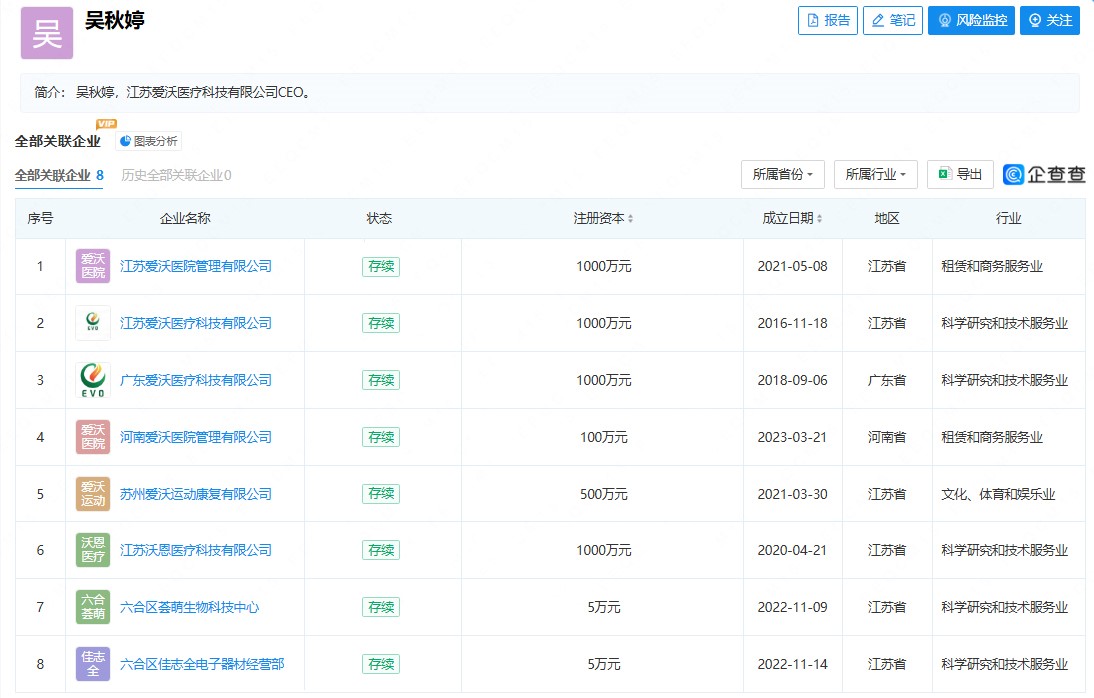
Take WU Qiuting, the founder of Jiangsu EVO Medical Science & Technology Co., Ltd. as an example. There are 8 affiliated companies with her:
Jiangsu EVO Medical Science & Technology Co., Ltd.
Jiangsu EVO Hospital Management Co., Ltd.
Guangdong EVO Medical Science & Technology Co., Ltd.
Henan EVO Hospital Management Co., Ltd.
Suzhou EVO Sports Rehabilitation Co., Ltd.
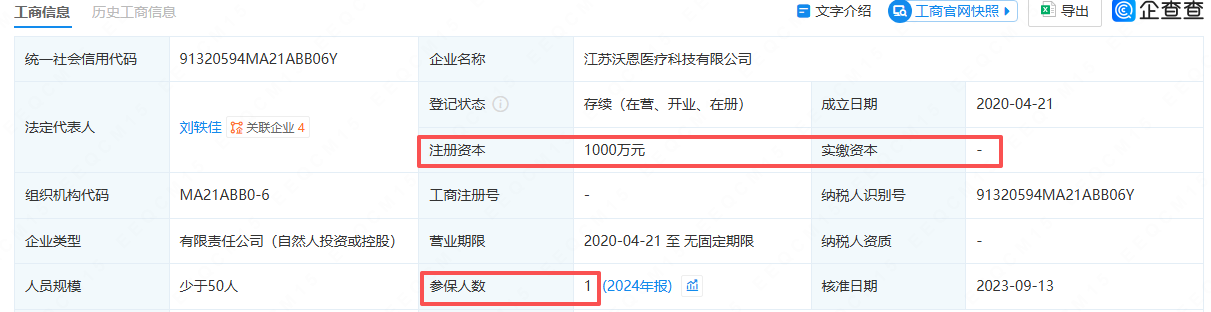
Jiangsu Woen Medical Science & Technology Co., Ltd.
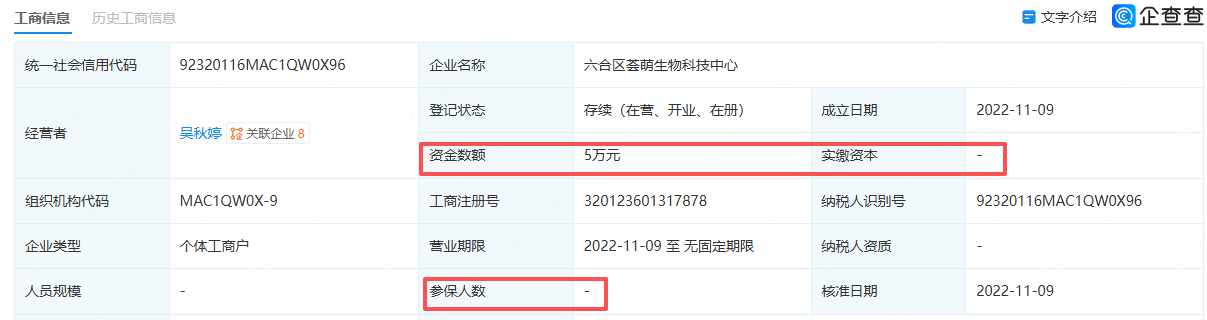
Liuhe District Huimeng Biotechnology Center
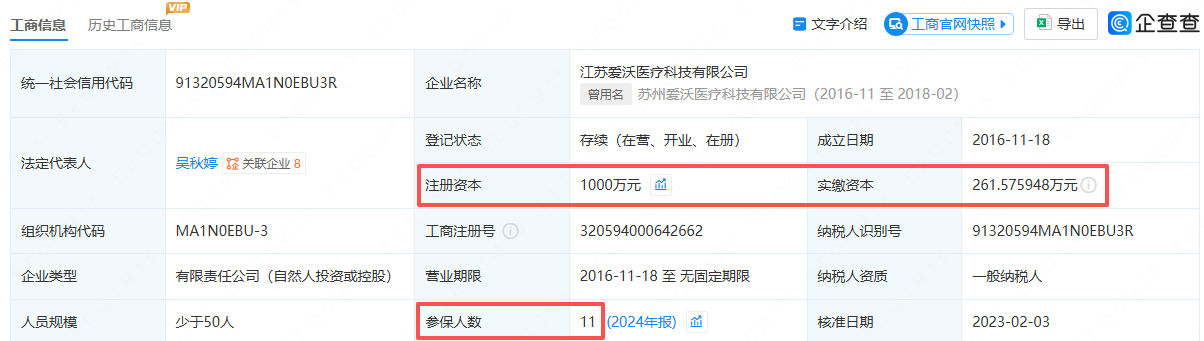
1. Jiangsu EVO Hospital Management Co., Ltd., has a registered capital of RMB 10 million, with a paid-in capital of RMB 2.61 million, and employs 11 full-time staff members.
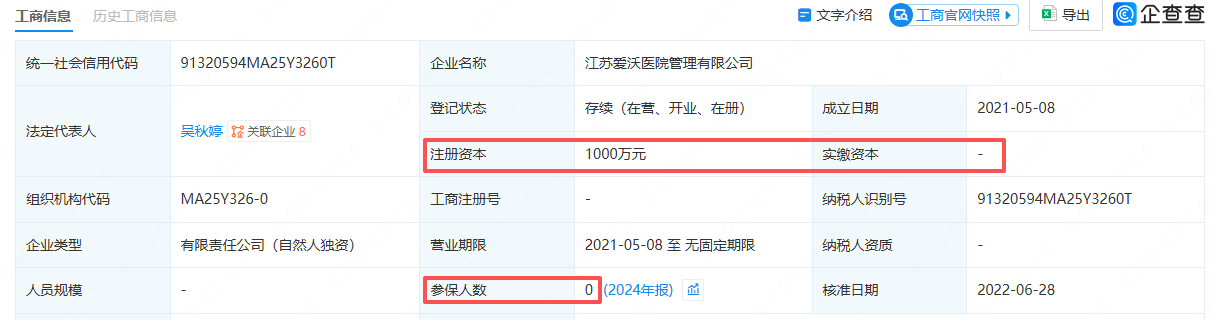
2. Jiangsu EVO Hospital Management Co., Ltd., has a registered capital of RMB 10 million, with a paid-in capital of RMB 0, and employs 0 full-time staff members.
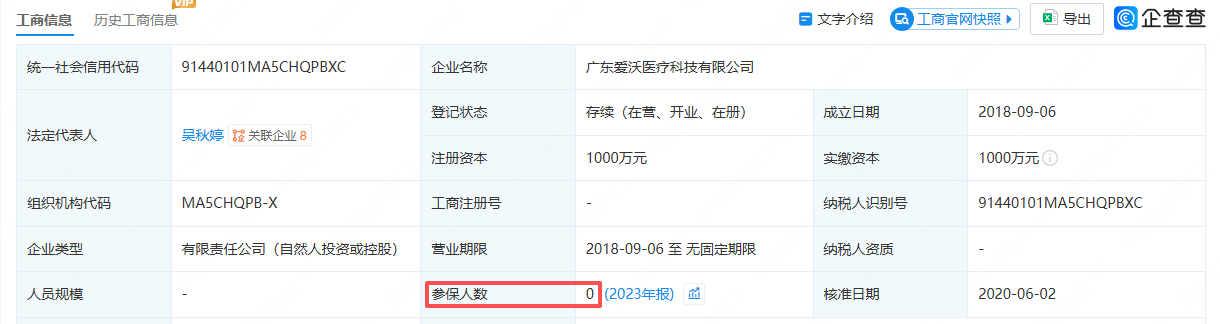
3. Guangdong EVO Medical Science & Technology Co., Ltd. has a registered capital of RMB 10 million, with a paid-in capital of RMB 10 million, and employs 0 full-time staff members.
4. Henan EVO Hospital Management Co., Ltd., has a registered capital of RMB 1 million, with a paid-in capital of RMB 0 million, and employs 0 full-time staff members.
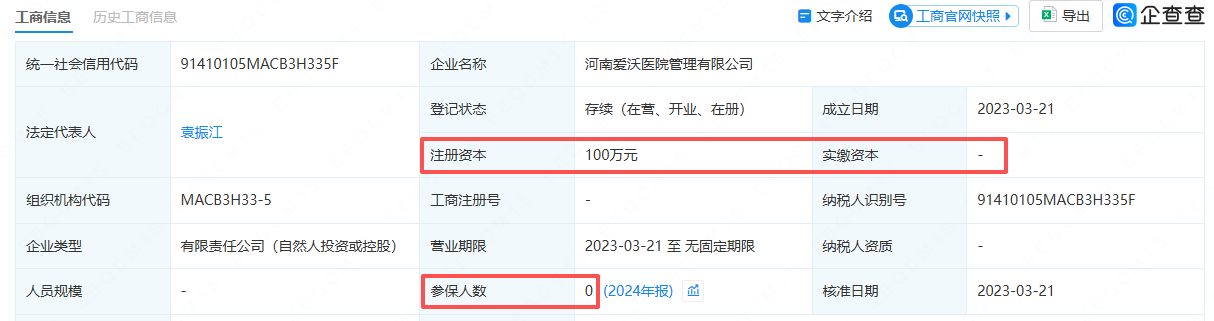
5. Suzhou EVO Sports Rehabilitation Co., Ltd., has a registered capital of RMB 5 million, with a paid-in capital of RMB 0 million, and employs 0 full-time staff members.
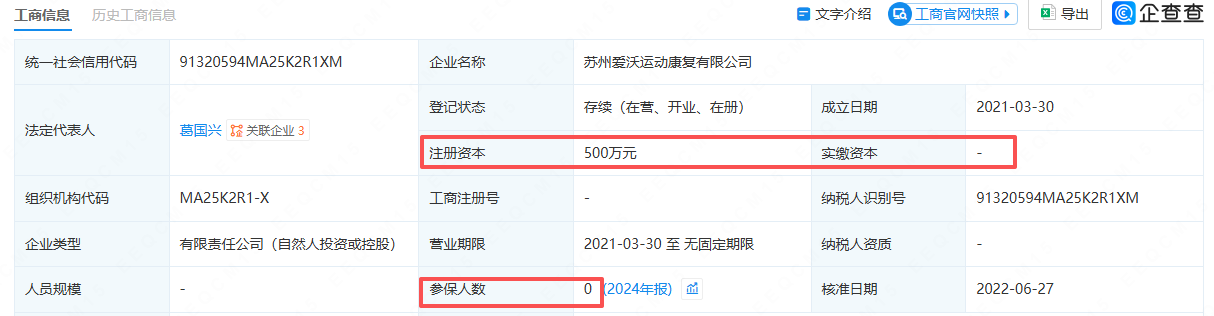
6. Jiangsu Woen Medical Science & Technology Co., Ltd., has a registered capital of RMB 10 million, with a paid-in capital of RMB 0 million, and employs 1 full-time staff members.
7. Liuhe District Huimeng Biotechnology Center, has a registered capital of RMB 50 thousand, with a paid-in capital of RMB 0 million, and employs 0 full-time staff members.
8. Liuhe District Jiazhiquan Electronic Equipment Business Department, has a registered capital of RMB 50 thousand, with a paid-in capital of RMB 0 million, and employs 0 full-time staff members.
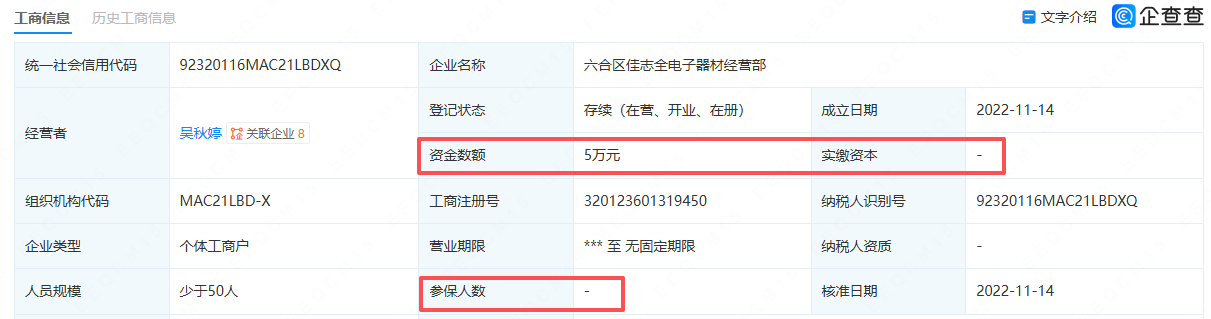
By reviewing the registration information of these affiliated entities, a shocking commonality has emerged: most of the companies share the “three-zero” characteristic of high registered capital, zero paid-in capital, and no formal employees.
Jiangsu EVO Hospital Management Co., Ltd., has a registered capital of RMB 10 million, yet its paid-in capital stands at zero, with zero insured employees. The same applies to Henan EVO Hospital Management Co., Ltd., Suzhou EVO Sports Rehabilitation Co., Ltd., and Jiangsu Woen Medical Science & Technology Co., Ltd. Either their paid-in capital is zero, or they have only one insured employee, making them wholly incapable, in terms of personnel and financial capacity, of carrying out their stated business activities. Even Guangdong EVO Medical Science & Technology Co., Ltd., whose registered capital of RMB 10 million has been fully paid in, reports zero insured employee and shows no trace of substantive operations. Its apparent function is merely to serve as a “shell vehicle”, a tool for issuing false invoices, improperly participating in public tenders, transferring funds, and channeling benefits. The large-scale registration of such shell companies not only circumvents market supervision but also renders profit-transfer activities within the healthcare industry increasingly concealed and systematized, seriously undermining fair competition.
If shell companies serve as the “carriers” of benefit transfers, then loopholes in the bidding process provide the opportunity. Public bidding in the healthcare industry is intended to be an important channel for selecting qualified partners and optimizing resource allocation. Yet in certain projects, it has degenerated into a stage for behind-the-scene manipulation, where substitution tactics are repeatedly employed to skirt regulatory requirements.
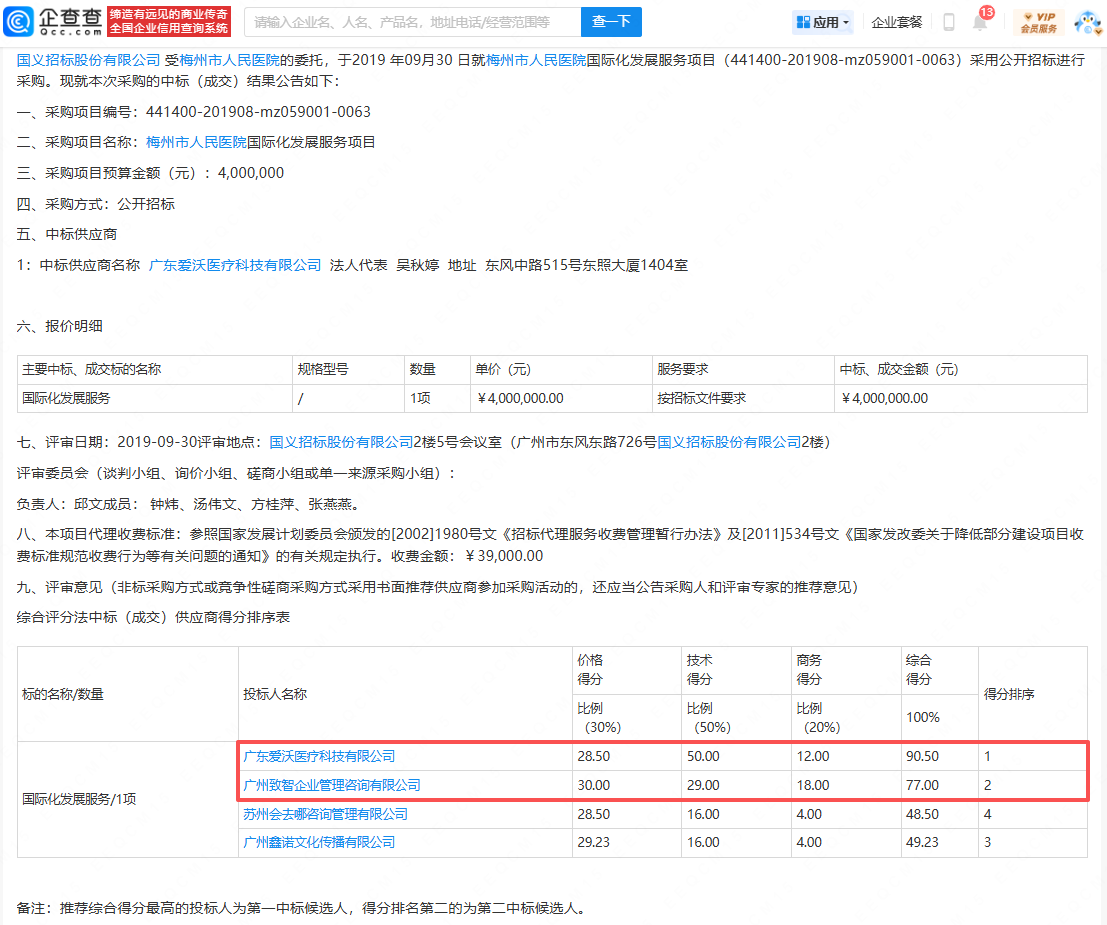
The open bidding for the International Development Service Project of Meizhou People’s Hospital in Guangdong offers a telling example. With a budget of RMB 4 million, the project was procured through an open bidding process. Ultimately, Guangdong EVO Medical Science & Technology Co., Ltd. ranked first with a composite score of 90.50 and won the contract. However, the company reports zero insured employees and lacks any verifiable operational experience. Therefore, it simply has no capability of providing international development service.
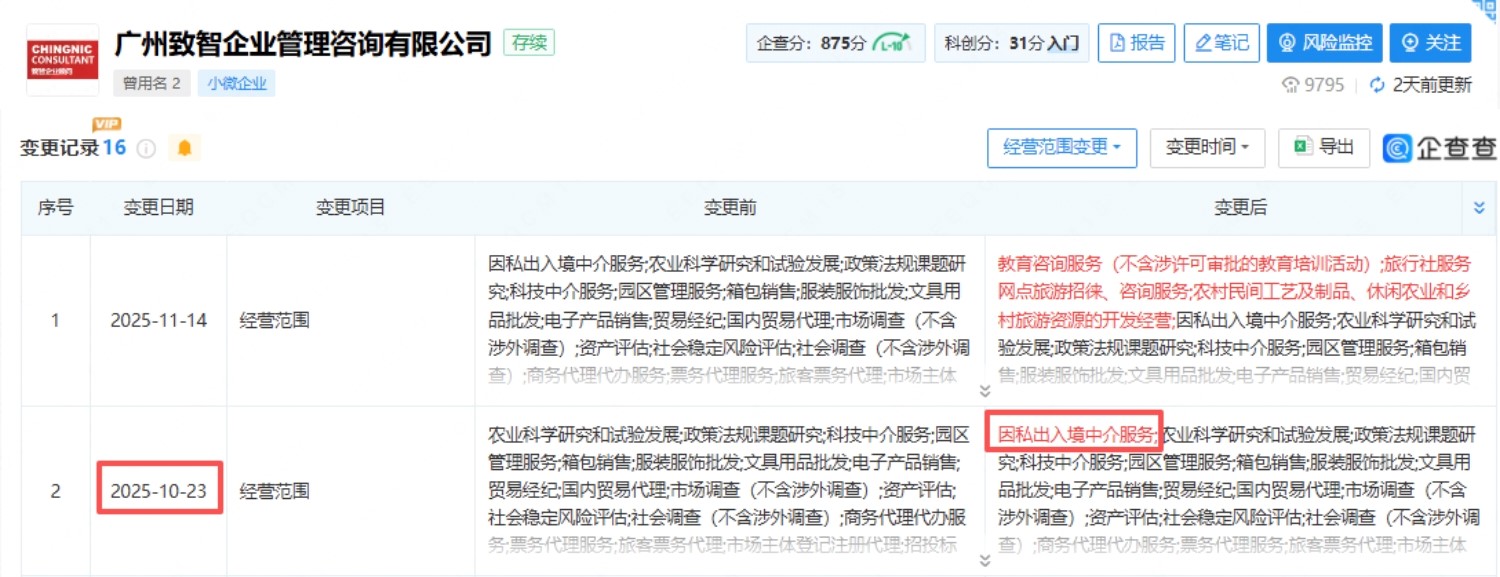
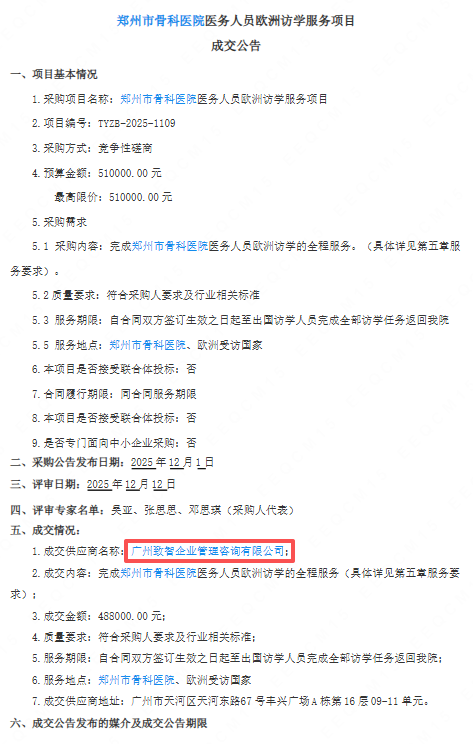
Even more striking is the case of Guangzhou Zhizhi Enterprise Management Consulting Co., Ltd., which ranked second among the winning candidates. This company only obtained its qualification for “Private Exit-Entry Intermediary Services” in October 2025. Before that, it had no experience in organizing fellowship programs in any hospital abroad, and its registered business scope did not include such services for a long time. Nevertheless, in December 2025, it was such an “unqualified and inexperienced” company that was awarded the contract for the European Fellowship Service Program for Medical Staff at Zhengzhou Orthopedics Hospital, with a transaction amount of nearly RMB 490,000.
The public-interest nature of the healthcare industry leaves no room for any unchecked capital manipulation or opportunistic exploitation.
What China’s Grade-III A hospitals truly need has never been “intermediaries with more polished resumes,” but partners who are clean, professionally competent, and committed for the long term. One of the central tasks facing China’s healthcare industry is to carry out anti-corruption in a sustained, systematic and uncompromising manner. It is not only to investigate individuals, but also to trace back the bidding mechanisms, service delivery, and the flow of funds. We must ensure that those who work diligently have prospects, and that doctors, team, and companies that genuinely create medical value must be given space to thrive. Public healthcare resources should not continue to be diverted into hollow systems that generate no substantive value.
The hope of China’s healthcare does not lie with speculators. It lies with the upright party secretaries and hospital presidents who seek for progresses, with the ambitious academic leaders, with the young doctors working tirelessly on the front lines, and with administrators who genuinely strive to improve hospitals.
As long as there is still a single spark, there is still hope for China’s healthcare. Seeing the problem but remaining silent is itself an indulgence of injustice. Time will eventually give the answer, just paraphrasing Schopenhauer’s popular moral philosophy, “Silent indulgence of evil is injustice and suppression of good.”