-
News & Events


From March 11th to 15th, 2026, the 51st International Exhibition of Inventions Geneva (IEIG) was grandly held in Geneva, Switzerland. As the world’s largest international platform for showcasing and evaluating innovative achievements, this year’s exhibition brought together more than 1,000 innovations from 35 countries and regions. The Chinese delegation presented 237 inventions, covering cutting-edge fields such as healthcare, artificial intelligence, and advanced materials.


Participants from around the world gathered at the exhibition hall, creating a vibrant atmosphere with active exchanges and strong engagement.
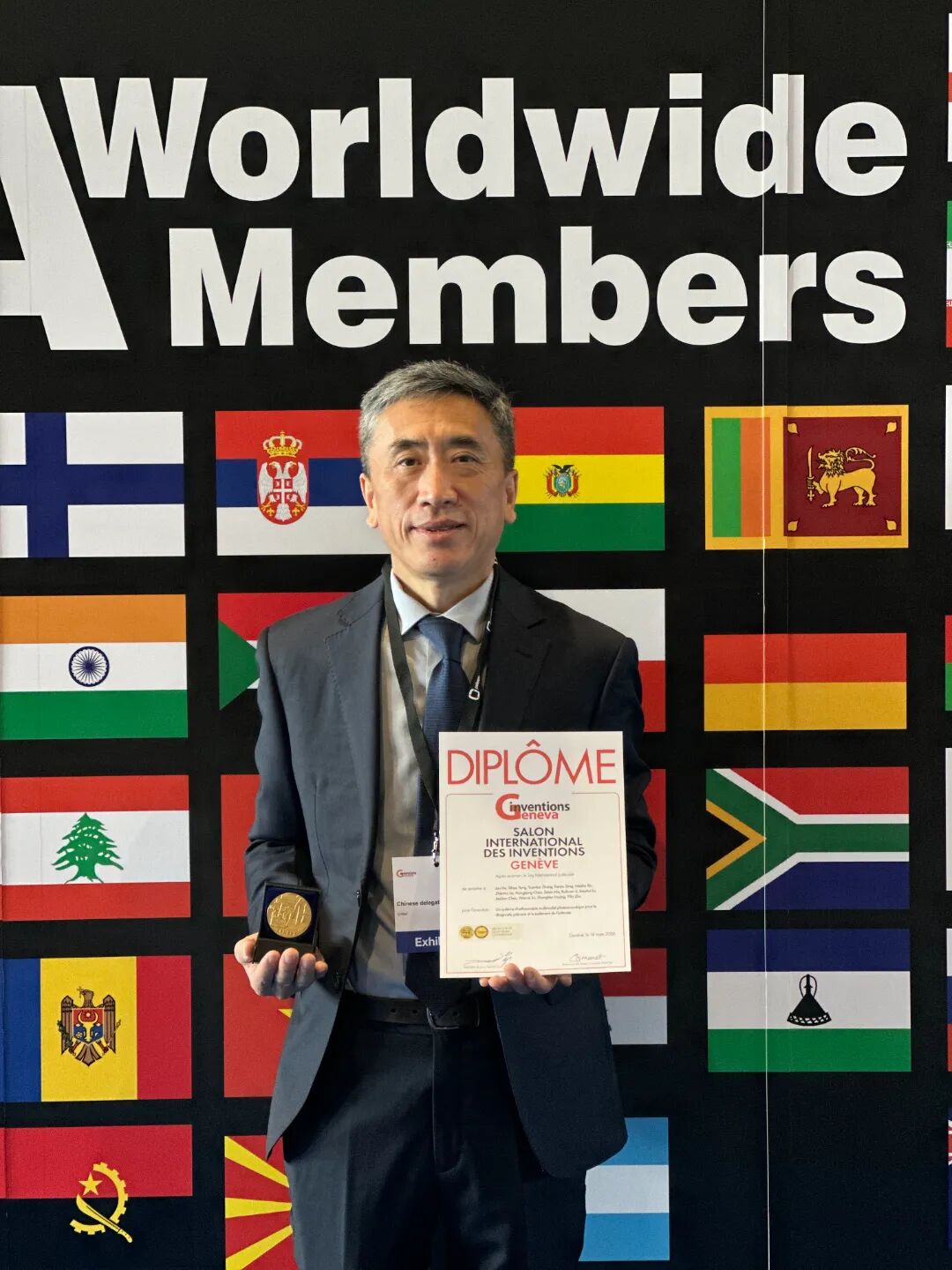
At this year’s exhibition, the team led by Prof. HU Jun from the Department of Orthopedics at the First Affiliated Hospital of Shantou University Medical College presented their original innovative project, “Photoacoustic Multimodal Arthroscopic System for Early Diagnosis and Treatment of Osteoarthritis.” Through rigorous defense and strict evaluation, the project stood out in intense competition and was awarded the Gold Medal. During the evaluation process, Prof. HU Jun presented the team’s more than 20 years of research accumulation, key clinical challenges and corresponding solutions, multiple invention patents, and scientific novelty search reports. The project received high recognition and praise from the jury, laying a solid foundation for subsequent translational application and clinical implementation.
Osteoarthritis is one of the most common degenerative joint diseases worldwide. Its early-stage lesions are often subtle and difficult to detect, significantly affecting patients’ quality of life. Conventional imaging techniques such as X-ray and CT are insufficient for identifying early cartilage damage. Although MRI has certain advantages, it cannot provide real-time intraoperative assessment. Meanwhile, existing arthroscopic techniques largely rely on subjective visual judgment by clinicians, lacking objective quantitative evaluation. Early detection and timely intervention are therefore of great clinical significance for prolonging native joint survival and improving patient outcomes.
To address the above clinical challenges, the team led by Prof. HU Jun, in long-term collaboration with the team of Prof. YANG Sihua from South China Normal University, has conducted in-depth research and innovatively developed a Multimodal Photoacoustic Arthroscopic System (MMPA). The system integrates photoacoustic imaging, polarization-sensitive photoacoustic imaging, and photoacoustic elastography, enabling comprehensive evaluation of cartilage in terms of structural characteristics, anisotropy, and mechanical properties. This approach overcomes the limitation of conventional arthroscopy, which relies primarily on morphological observation, and advances toward a new paradigm of precision diagnosis and treatment characterized by “structure + function + quantification.”
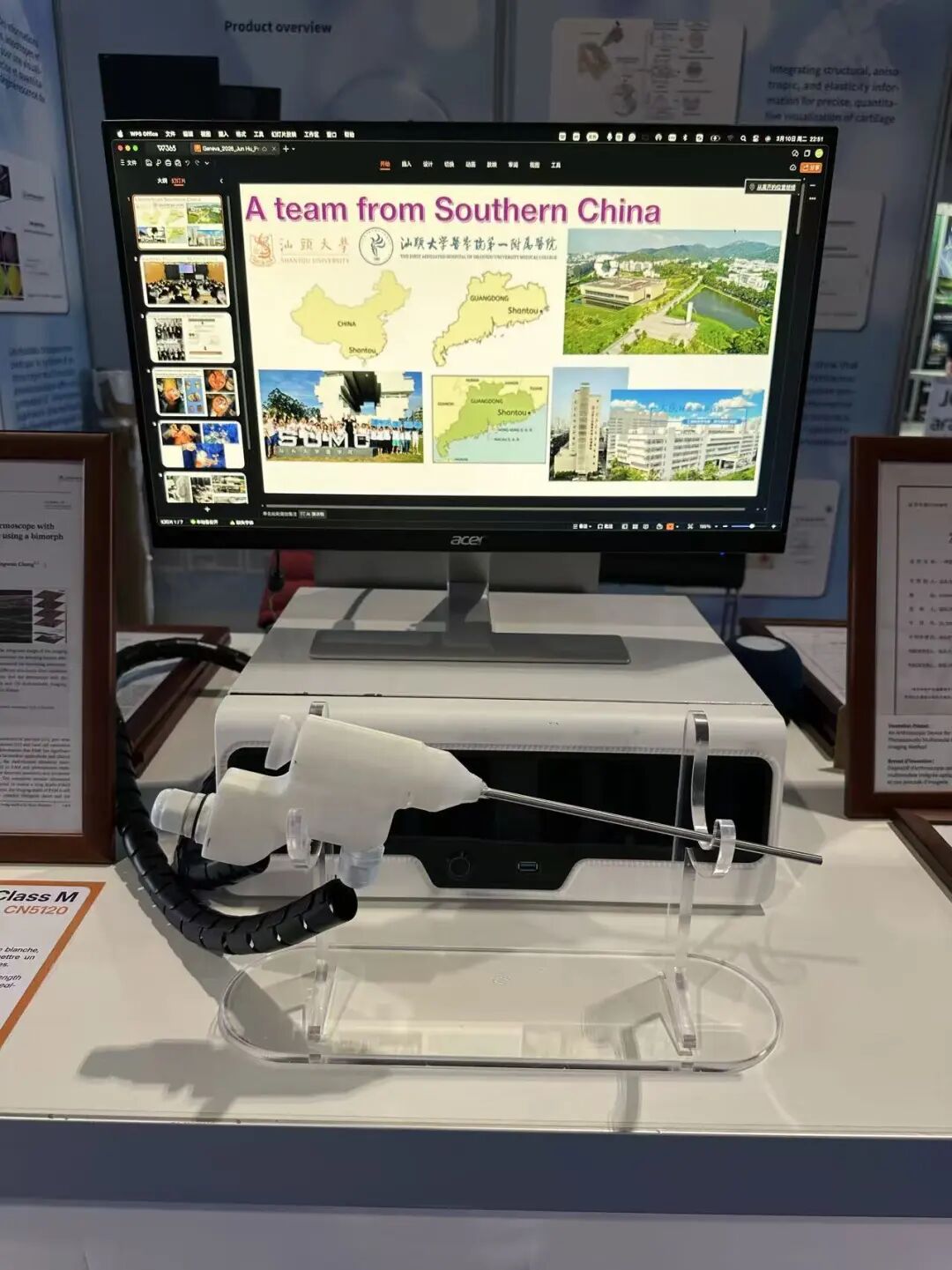
The core innovations of the system include:
l The first introduction of multimodal photoacoustic imaging into arthroscopic applications, enabling real-time intraoperative imaging;
l The integration of complex optical and acoustic components into a miniaturized probe, meeting the requirements of clinical surgical applications;
l The development of an artificial intelligence–based diagnostic model, enabling quantitative analysis and grading of cartilage degeneration.
Through years of technical accumulation and engineering optimization, the team has successfully achieved a critical transition from proof of concept to system integration. Preclinical studies in a large animal (goat) osteoarthritis model demonstrated that the system significantly outperforms conventional arthroscopy and MRI in detection rate and diagnostic accuracy, making it a highly promising advanced technology for clinical application.
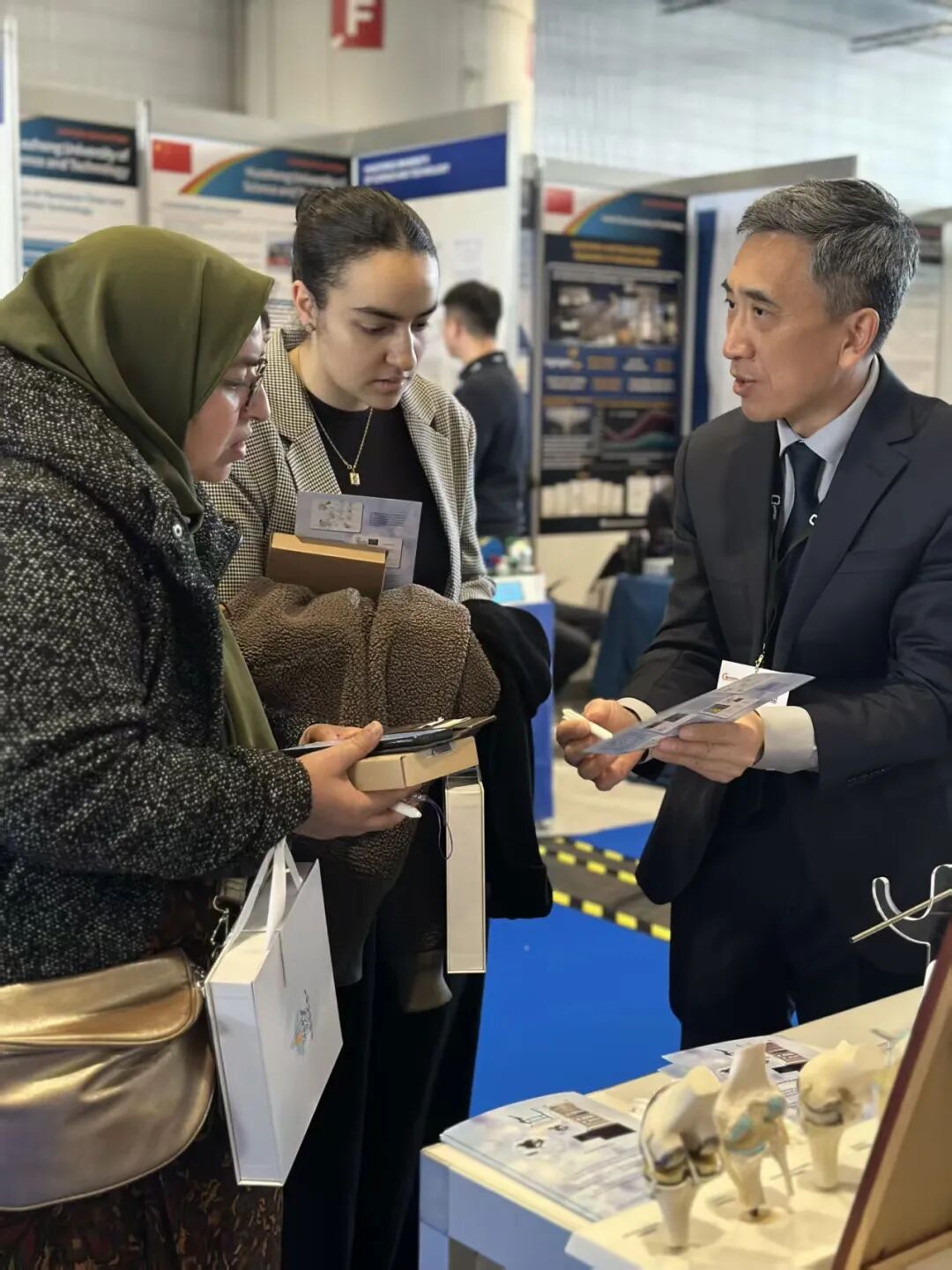
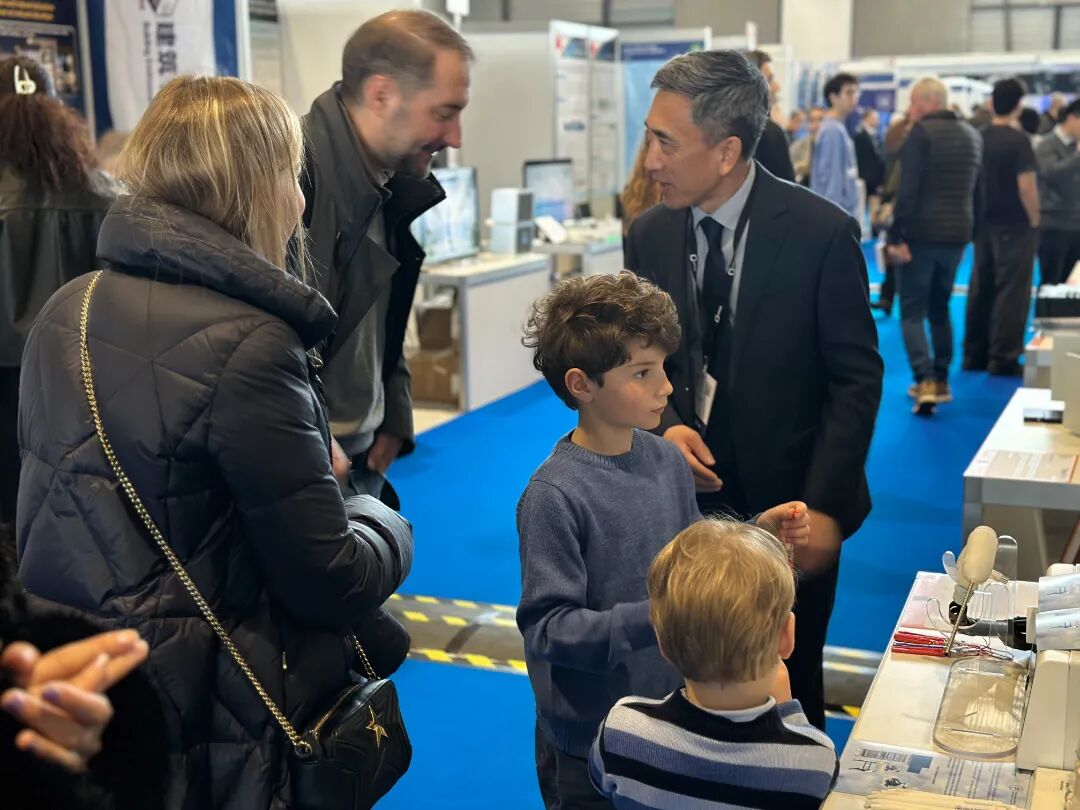
During the exhibition, the team led by Prof. HU Jun engaged in in-depth discussions with expert judges, researchers, and industry representatives from around the world, focusing on technological innovation, clinical application prospects, and pathways to industrialization. With its outstanding innovation and strong application value, the project attracted widespread attention. This award not only represents international recognition of the project’s technical excellence, but also further strengthens confidence in advancing product registration, clinical translation, and industrial implementation.
For many years, Prof. HU Jun’s team has been driven by clinical needs and has focused on translational medicine in orthopedics. Continuous breakthroughs have been achieved in the integration of medicine and engineering for the diagnosis and treatment of bone and joint diseases. The team has undertaken multiple national and provincial-level research projects, obtained numerous independent intellectual property rights, and established a virtuous development model of: “clinical demand-driven, innovation-powered, and translation-oriented development pathway”. Following the Gold Medal with Congratulations of the Jury at the 50th IEIG last year, the team has once again won a Gold Medal this year with a brand-new project, highlighting its sustained innovation capability and growing international influence, and making tangible contributions to the advancement of the discipline.
Looking ahead, the team will continue to advance clinical validation and regulatory registration of the multimodal photoacoustic arthroscopic system, and expand its applications in orthopedics and other minimally invasive surgical fields. These efforts aim to further improve early diagnosis and treatment of diseases and contribute more innovative solutions to human health.