-
News & Events


Over the past 7 years, Gloryren has received an investment totaling 88.36 million yuan. All this investment has been made to bring together renowned medical masters across the world, with a focus on developing three aspects for Chinese hospitals: hospital management, specialty construction, and talent cultivation. For every hospital, every department, and every doctor, only when you’re truly doing well these three tasks, and only by executing these three major tasks to perfection can all of China's healthcare challenges be thoroughly resolved. Because quality care for patients is premised on the excellence of the doctors. Seven years amount to 2,550 days and nights. During this period, we exchanged 380,000 English emails, produced thousands of Chinese and English videos, organized thousands of Sino-Euro webinars, and held hundreds of scientific research discussions. With dedication, we have gathered 186 distinguished doctors across the world with noble character and refined demeanor. Over the past 7 years, they have committed their full efforts to contributing to China’s healthcare development. At the opening ceremony of the 2025 SEOS Global Launch, as the lights dimmed, a starry spectacle unfolded. A Chinese-English video featuring the quote "When the rise and fall of the nation is at stake, every citizen bears responsibility" told the world that every inch of the land beneath our feet is soaked in the blood of our predecessors. The soundtrack for this video was "My Motherland"—the theme song from the film Battle on Shangganling Mountain. On November 14, 2026, we will re-launch the event in the dreamlike city of Hangzhou, China. We features the song "Take Me to Your Heart" by a Danish band, presenting the world with a unique side of Hangzhou, and a vibrant, extraordinary China. At the closing of the banquet, we first paid tribute to the 197,000 martyrs who sacrificed their lives in the 1950 War to Defend Korea (the Korean War). We played "Bloom"—the theme song from the film The Volunteers, again and again, bidding farewell in quiet remembrance. We took a group photo together, and our hearts are filled with gratitude: gratitude to everyone who traveled to Shaoxing, China—a place far from the hustle and bustle, where one can find peace of mind. Gratitude to every individual who is willing to contribute to China’s healthcare, and to every person who devotes themselves to our great motherland. We are determined to uphold this belief and nurture it deep within our hearts. I want there to be a beam of light shining for me in this world; I want a stage lit up for me; I want people to come to me from across the world. This means more than I can say. Such beautiful moments, yet time slips away—what can one do? Amid green mountains and clear waters, we will meet again.
Prof. Pfeiffer Welcome speech

Good morning, everybody. I welcome you on this bright morning here in China for the second day of the Sino-Euro Global Forum on Hospital Management, Specialty Construction and Talent Cultivation. Welcome to all of you. Now, last night we had a splendid banquet dinner in this room. I thoroughly enjoyed it. And I think it was a very good occasion to meet old friends, colleagues, and even more importantly, to make new friends and new friendships. Last night we already started exchanging ideas, and that is what medical people do when they meet. They talk about patients, but they also talk about challenges that everyday hospital care has for them, and we did that last night. Now, part of the forum is already accomplished. We have been in contact, we have been discussing problems, but also solutions. So thank you very much for that. I would like to thank you for coming here. China is a big country and you traveled far to be here to meet with other colleagues, to meet with us, to meet with us from Germany. And I would like to thank my German colleagues for coming. Foremost, I would like to thank Gloryren for inviting us, for setting up the scene to be together. Not only for thriving continuously to promote the medical system, but to make the most important possible, and that is to meet each other. So thank you very much, indeed. And thank you, Juin Peng. Well done! Now, for today, I hope that we will exchange ideas. As we started last night, China and Germany are very very different countries. But even last night, when talking to colleagues, I found that similarities, at least in the medical system, seem to prevail over differences. So we face the same medical problems, but we also face very similar administrative problems in China and in Germany. Both countries have an ever more aging population. And we both countries face the problems of ever increasing possibility, but also demands by patients and therefore higher costs. And more recently, at least in Germany. We have difficulties of finding and keeping in the system people who want to work in the system, rather than to go to other fields of business where money can be earned much more simple. So these are things that we will discuss. So, finally, I do hope that today we’ll discuss these problems. And I said last night, I don't think that in Germany we have a lot of solutions for China's problems. But what we have is experience in making the mistakes, so perhaps we can share some of those and spare you some of the wrong routes that may not be so fruitful. So I wish you a very interesting second day of the forum-inspiration for those challenges that you may face at your hospitals and you may face tomorrow and next week and the end of the year. And I have the wish that you make new friends and colleagues and we may see us again next year. So thank you very much for your attention.
Hospital Management
Moderating Chairs: Prof. SHU Yusheng, Prof. Pfeiffer
Panel Members: Prof. CHEN Lina, Prof. HUANG Wanxin, Prof. ZHOU Jun, Prof. Wagenlehner
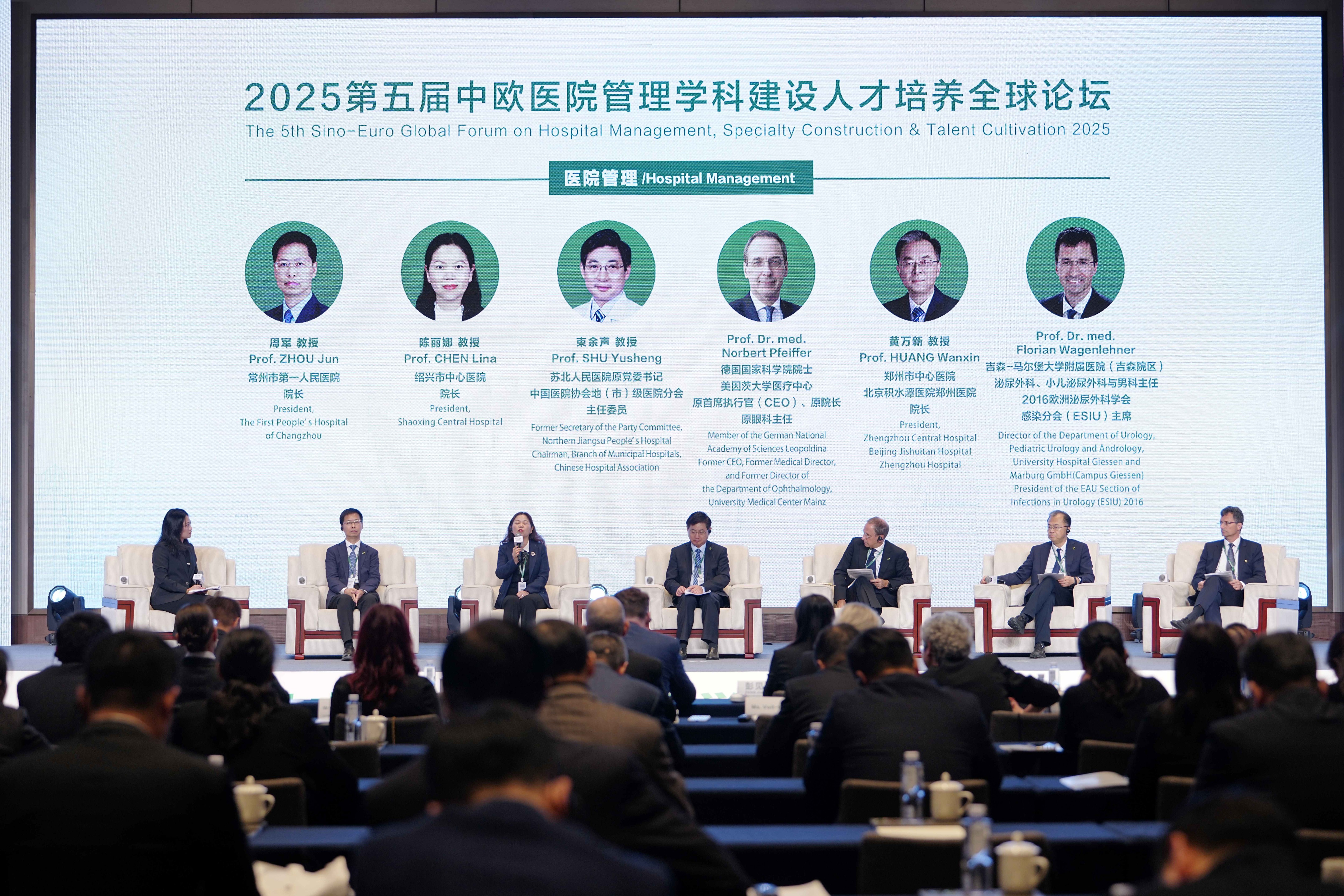
1. Nowadays, a large number of patients in many Grade III Class A hospitals in China come from outside their local regions, what does the trend indicates? Facing the cross-regional flow of patients, how should the management of the hospital optimize resource allocation and service capacity?
Prof. SHU Yusheng: Under the current tiered diagnosis and treatment system, particularly for large Grade III public hospitals, we-as a city-level hospital-still face pressure, primarily manifested in the phenomenon of patient loss. Behind this phenomenon, its essence lies in two aspects:
1. Improved health awareness among patients: As understanding of the value of life and the need for health deepens, patients tend to choose large Grade III hospitals in cities such as Beijing, Shanghai, and Guangzhou.
2. Advantages at the technical level: The leading position of large Grade III hospitals in equipment and cutting-edge technologies further attracts patients.
In response, as a city-level hospital (such as Northern Jiangsu People’s Hospital), we need to make improvements in the following four areas:
First, strengthening internal competence: Enhance the hospital’s professional and technical capacity. The purpose of my leading a team of six experts to attend this forum is to improve capability and proficiency through cross-disciplinary exchange.
Second, combining “going out” with “bringing in”: Select and send specialists to higher-level hospitals for advanced training, thereby feeding back into and strengthening local capabilities; through platforms such as this forum, invite top experts from Germany and from within China to provide guidance and promote capability improvement.
Third, optimizing processes and layout: Further enhance the patient experience, such as by improving one-stop services, facilitating online-offline interaction, and refining internet-based outpatient services and day-care processes.
Fourth, practicing value-based healthcare: Start from the interests of patients, experience what patients experience, and while providing high-end technical services, further strengthen humanistic care.
Prof. CHEN Lina: I believe that the phenomenon of patients flocking to Class A Grade III hospitals stems mainly from three factors. First, the uneven distribution of medical resources. By the end of 2024, there were 349,000 hospitals nationwide, including 12,000 public hospitals and 37,000 private hospitals. Although the overall volume of medical resources is substantial, why do patients still crowd into large hospitals? The key reason lies in the imbalance of resource allocation. Many large Grade III and public hospitals are concentrated in provincial capitals and core urban areas, while primary and remote regions continue to face shortages of healthcare professionals and essential medicines.
Second, the strength of specialty construction. Leading hospitals in China have built exceptionally strong medical specialties. They have deeply cultivated their focus areas-for example, Huashan Hospital in Shanghai with cerebrovascular diseases and dermatology, Zhongshan Hospital with cardiovascular and hepatic diseases, and Fuwai Hospital as a national center for cardiovascular care. This strong specialization attracts large numbers of patients seeking high-quality treatment.
Third, improvements in the medical insurance and transportation systems. In recent years, China’s healthcare insurance system has improved significantly, with rural and urban insurance covering roughly 70% of medical expenses. The nationwide “one-card access” initiative for cross-regional medical treatment has greatly facilitated patient care. Coupled with the rapid development of high-speed rail and air transport, the time, distance, and travel costs for patients seeking treatment in other regions have been substantially reduced.
As administrators, what should we do next? I believe we can work in three directions:
1.Optimize resource allocation: Plan and develop specialty disciplines based on the prevalent diseases in the region, refining and strengthening these services to encourage patients to seek care locally.
2. Enhance international collaboration: As demonstrated by the forum hosted by Juin Peng with a team of European experts, their rigorous attitude and relentless pursuit of scientific research offer valuable lessons. We should also go abroad more often to broaden our perspectives and strengthen academic exchanges.
1. Extend service capacity: Advance the development of urban medical groups, medical alliances, and county-level healthcare communities. Promote the downward flow of expert resources to primary care institutions so that people can access high-quality medical services closer to home, making healthcare more convenient for the public.
I believe that through these measures, we can retain more patients locally and enable doctors to provide better care for the communities they serve.
Prof. HUANG Wanxin: The issue of patients seeking medical care across provinces and regions reflects the imbalance in the distribution of high-quality medical resources and the insufficient service capacity at the primary level. Zhengzhou Central Hospital (Beijing Jishuitan Hospital Zhengzhou Hospital), for example, was approved in 2023 as a National Regional Medical Center construction project-one of the key measures taken by China to address these challenges.
1. Outflow of patients: Local patients travel to cities such as Beijing, Shanghai, and Guangzhou-where high-quality medical resources are concentratedto obtain better medical services.
2. Inflow of patients: As a Grade III hospital in a prefecture-level city, we also attract patients from outside the region. With the approval of the National Regional Medical Center project, our regional influence has expanded, further increasing patient inflow.
To address these issues, we have taken several steps to optimize the allocation of medical resources:
First, we focus on strengthening specialty advantages and building a strong technical brand to enhance the hospital’s core competitiveness. By providing technical support, introducing high-level talent, and optimizing service processes, we have strengthened key specialties such as orthopedics, emergency medicine, and gastroenterology, improving our capacity to treat critically ill and emergency patients and attracting and retaining more patients. Taking orthopedics as an example: After being approved as a National Regional Medical Center construction project, we initiated collaborative programs with Beijing Jishuitan Hospital. Under the leadership of Directors ZHA Yejun and YANG Dejin, we subdivided orthopedics into eight subspecialties. A dual-director system was implemented, appointing experts from Beijing Jishuitan Hospital as executive directors of our orthopedic wards, driving technological innovation. At the same time, we strengthened research training and enhanced the hospital’s overall development through the parallel advancement of management, technology, and branding. As a result, our influence has continued to grow: the proportion of non-local inpatients in our orthopedic department increased from 13% in 2023 to approximately 31% at present. This demonstrates the positive impact of the National Regional Medical Center model in addressing the issues mentioned above.
Second, we optimize medical service models and improve the patient experience. Through integrating specialty resources, promoting cluster-based development, and establishing specialty disease centers, we have continually strengthened multidisciplinary collaboration (MDT) to offer one-stop services for patients.
Third, we increase investment in digital health and enhance smart hospital development. With information technology as the foundation, we introduced a “one-bed-for-the-entire-hospital” model, breaking down departmental silos and enabling shared ward resources. This not only facilitates timely treatment but also improves bed utilization. Furthermore, we have established teleconsultation networks with 59 renowned domestic and international hospitals, enabling seamless diagnosis and treatment pathways between different levels of care and making medical services more accessible for the public.
Fourth, we strengthen regional coordination, expand our influence, and promote capacity building at the primary level. We serve as a crucial link between top-tier national medical resources and grassroots healthcare institutions. With government support, we have led the formation of medical alliances and established a closely integrated urban medical group. By building telemedicine collaboration networks, deploying experts to support grassroots hospitals, sharing equipment, and co-managing chronic diseases, we have helped raise the treatment capacity of primary healthcare providers. Ultimately, we are working toward the national goal of achieving a healthy pattern in which “serious illnesses can be treated within the province, and common diseases are managed at the primary level.”
Prof. ZHOU Jun: In China today, Leading hospitals and prefecture-level hospitals resemble the relationship between a “spear” and a :shield.” Leading hospitals hope to attract complex and critical cases from surrounding provinces, while prefecture-level hospitals aim to “hold the line” and prevent excessive patient outflow. This dynamic creates a sense of confrontation between the “offensive” and the “defensive.” National policy emphasizes that “minor illnesses should be treated within the township,” that common and frequently occurring diseases should be managed at county- or city-level hospitals, while complex and difficult cases should be addressed by major Grade III Class A hospitals. In practice, however, achieving this balance is not easy.
First, strengthening internal capacity and specialty development-being strong ourselves. In 2025, we undertook several key initiatives, such as integrating cardiac and great vessel surgery. Many complex cardiac and aortic conditions that previously required referral elsewhere can now be fully treated within our hospital. We also jointly established the East China Neuroimmunology Center with Beijing Tiantan Hospital. As a result, many patients with autoimmune neurological diseases-who previously traveled to Shanghai for treatment-are now returning to our local hospital in Changzhou. This demonstrates that when our specialties become stronger, we can retain complex, difficult, and critical cases locally.
Second, policy guidance plays an essential role. I recall that when I was younger, we had a very strict tiered diagnosis and treatment system. To access a major hospital, patients had to go through the tiered referral process. Rebuilding such a system today is not easy. Therefore, policy direction-especially through medical insurance reforms and supporting regulations-is a powerful driver for achieving a more balanced distribution of healthcare resources nationwide.
Prof. Wagenlehner:Yeah, first of all, thank you very much. It's an honor and privilege to be here. So much has been said already, and I would like to address this question a bit also of my urological career and urological focus.But first of all it is also a success story for Grade Ⅲ Class A hospitals that they have a reputation and bringing patients from cross-regions into their hospitals. And this success is certainly also driven by more and more evidence that, there is a better outcome if there is a higher expertise and especially in surgery, this outcome can more or less be measured by outcome measurements. And we have now in Germany this kind of case-volume-based reimbursements in certain surgical disciplines. for example, esophageal resection or rectum resection and this is also starting with mamma resection. And in my urological area, we will soon also see that for radical prostatectomies, for example, certain case numbers would be needed to be able to get reimbursement for these procedures. So nevertheless, it certainly takes an additional burden for Grade Ⅲ Class A hospitals and it's not easy to cope with it, but, networking that has been said already, I think is a very critical opportunity, to also be able to pre-select for these patients and to have a better information on these patients before they come to the offices in these Grade Ⅲ Class A hospitals. And for example, in Germany we have these so called tumor boards for oncological patients, where these patients are discussed in an interdisciplinary basis and a lot of the information can also be fed into the tumor board before the patients have already arrived to the hospital. For example, patients that have a kidney tumor, you can already discuss these patients on behalf of the radiological X rays. You have and already have some ideas how these patients will be managed, or maybe they don't need surgery right before but receive systemic treatment and then get, after the systemic treatment, surgeries. So these are right away and straightforward measures and objectives that should be followed, to decrease the workload in Grade Ⅲ Class A hospitals, to keep the expertise and keep the better outcome, which we hope we have.
Prof. Pfeiffer :Well, if you've seen me, I've been writing all the time, because there are so very many good ideas and thoughts from colleagues and I really enjoyed the session very much. Now I'll try a short wrap up. Now, we all see in Germany and in China, like we seem to have the problem, and patients tend to go to Grade Ⅲ Class A hospitals and we don't mind them to do that unless they have something that can be cured elsewhere. So the common cold should not be seen at Grade Ⅲ Class A hospitals. And we've exchanged ideas how to actually overcome that overcrowding in these hospitals. And that is we need to raise the standards in Grade One hospitals and places. We need to improve their development. And that can be done by knitting networks, exchanging ideas, giving the patient, not only the feeling but make them trust in being treated well in their local hospital or site. But we need also to make sure that reimbursement goes in a way that will encourage certain diseases to be treated in Grade Ⅲ Class A hospitals not in Grade One and vice versa. Other things should be treated well in primary care settings and not in other settings. Now, when it comes to the impact of pricing, we saw different aspects. Pricing is necessary and pricing can again improve quality, if the pricing is good and the reimbursement is good for special entities that should only be treated in special areas. But on the other hand, and I may add, we saw that in Germany, if the price is high for some things, more procedures will be done more than necessary. So it is very important to be very careful with pricing and reimbursement. But doctors, I may say, are always very smart to find out where there are the loops in pricing system, and finally in recent years, again, China has tried to implement a tiered diagnosis and treatment system. We find that this is necessary, but it is also very necessary to distinguish between diseases that should by all means be treated in Grade Ⅲ Class A hospitals and those that should not. And again, it is education. It is raising the standards all above and having networks that may help to very quickly find out whether a patient needs a grade three, two or one. And that I think is of utmost importance. And with that I would like to conclude the session and thank the discussions very much. I've learned a lot, It has been a great session. Thank you.
2. What impacts does the adjustment of the prices for medical service(such as fees for examination, surgery, and hospital bed?) have on hospital revenue and specialty development respectively?
Prof. SHU Yusheng: This issue is indeed highly complex, yet also very real and sharply defined-an archetypal “double-edged sword.” Recently, during a field study in Jiangsu, the National Health Commission selected Yangzhou, specifically Northern Jiangsu People’s Hospital, as one of the key units for investigation. This recognition is largely attributable to the price adjustment policies jointly promoted by multiple government departments, including increases in staffing quotas and reforms to employee compensation structures.
However, the price adjustments have also created significant pressure on hospital development. Drugs and consumables are now subject to a “zero mark-up” policy, with the use of high-value consumables strictly controlled; moreover, the prices of diagnostic and laboratory tests have recently been reduced. As a result, hospital administrators are under tremendous pressure. Overall operating revenue has declined. Although surgery fees and bed fees have increased, they cannot offset the loss of income from drugs, consumables, and diagnostic tests.
From the perspective of value-based healthcare, the internal economic structure of hospitals has indeed been reshaped. For example, in our hospital, the proportion of drug expenditures has dropped from 40% to 18%; consumables from 25% to 20%; and diagnostic/laboratory testing from 30% to 20-25%. Although service-related prices appear to have increased, the hospital’s effective revenue-or the funds that can actually be utilized-has decreased.
From our perspective, we may need to focus on two key areas.
1. Strategic allocation and overall planning. With surgical price adjustments, technically intensive surgical departments have seen an increase in surgical volume. However, their DRG/DIP reimbursement weights do not necessarily rise accordingly, meaning revenue may not increase despite higher activity. Yet these specialties remain crucial to the hospital’s long-term development. What, then, should we do with diagnostic departments, auxiliary departments, foundational support units, and platform departments-such as pathology, radiology, and laboratory medicine? I believe we must strengthen overall planning and ensure balanced development.
2. Based on our hospital’s characteristics, we must excel in three areas: Continue strengthening our core specialties-extend our strong capabilities while addressing weak links. Encourage internal medicine departments to develop more surgical or interventional procedures to promote growth. Enable diagnostic and laboratory departments to launch new technologies and new projects to compensate for revenue gaps. Identify and cultivate new medical personnel to support the development of emerging technologies. Only through these approaches can the hospital achieve higher-quality and more sustainable development under the current price reforms and value-based healthcare framework. This is essential for advancing specialty development and building stronger talent teams. Otherwise, declining efficiency and effectiveness may lead to talent loss, operational deterioration, or even threaten the hospital’s survival.
Prof. Pfeiffer:Well, pricing is very important in medicine. We would like to always do the right things for patients. But we have ample bad experience in Germany. So if the pricing is high for technical procedures then more procedures are done in that area. For example, when pricing is high for CT, MRI, or cardiac catheterization, the number of these procedures increases. Thus, pricing is driving what we do in medicine, and that's not good. But it can be used intelligently, I think. Now, Prof. Wagenlehner already said something very important. Pricing must reward quality. It is very important that rare diseases are only treated at very specialized hospitals. For example, a hospital must perform a certain number of pancreatic cancer treatments to maintain quality. Therefore, pricing should be higher for such hospitals, while hospitals that perform only one or two cases should receive little to no reimbursement. The same is true, for example, for breast cancer. In Germany, we have the problem that many hospitals treat breast cancer, but not at a high quality. Now only those hospitals will be paid who do many hundred procedures, and I think that's a good idea. So let's be careful. Doctors are very intelligent people and they understand quickly the rewards of a pricing system. So we must be very careful to make a pricing system in the best interest of the patient. That means rare diseases should be treated only in designated centers, but other diseases should not necessarily be paid and done in very high qualified hospitals because they do them at very high prices. The prerequisite, however, is that the other centers treating less complex diseases must also maintain high quality. And that is, I think, the challenge. Thank you very much.
Prof. CHEN Lina: Revenue in Chinese hospitals is primarily divided into four categories: drug sales, consumables, diagnostic and laboratory testing, and medical service fees. Since the 2009 pilot of the “zero mark-up” policy for drugs, hospitals no longer earn profit from medications. In 2019, a similar zero mark-up pilot was implemented for consumables, eliminating profits from medical devices. As a result, hospitals now have only two primary sources of profit. In recent years, reductions in the prices of diagnostic and laboratory tests have further increased financial pressure, especially for municipal and county-level hospitals. Testing revenue accounts for approximately 30% of total hospital income, so these reductions have a significant impact on overall revenue. One fortunate aspect is that the reductions mainly affect equipment-based tests, while surgical and technical service items still have growth potential.
In line with national policies, we have developed a three-pronged strategy for diagnostic and laboratory departments:
1. Establish Shared Centers: By creating shared diagnostic centers, we aim to reduce redundant equipment investment across regions and improve testing accuracy.
2. AI-Enabled Diagnostics: Implementing intelligent tools helps reduce labor costs while enhancing the precision of testing.
3. Localization and Procurement Optimization: For example, this year our hospital has shifted some equipment toward domestic alternatives. Out of 40 Level-4 bidding items, 37 have been completed, resulting in an average profit increase of 20-30%. By combining specialty planning with equipment procurement and Level-4 bidding adjustments, we have enhanced diagnostic revenue and overall medical service income. This approach allows many hospitals-particularly municipal and county-level institutions-to achieve a smooth transition amid increasing competition and internal pressure.
Prof. ZHOU Jun: For hospital presidents, this is an extremely weighty issue. Without sufficient funds, nothing can function properly, which is why I have always emphasized the importance of hospital management. While we cannot control price adjustments, we must accept reductions in drug prices, consumables, and diagnostic tests. However, other sources of medical service revenue must be increased wherever possible.
The healthcare reform in Sanming city took ten years to raise medical service prices from historically low levels to 45%, with a target of 55%. In Zhejiang, the average level is around 35%, and in Jiangsu approximately 30%, which already represents a strong performance for hospitals.
To further improve, I believe we must adapt to these changes through three main approaches: Lean management:
1. Lean management means carefully optimizing every aspect of hospital operations. Utilities such as electricity, water, and gas must be managed meticulously, and costs must be reduced wherever possible. Even small items-such as gauze, gloves, trash bags, or paper-require detailed oversight. This is how we maximize internal efficiency and reduce unnecessary expenditure.
2. External expansion: Hospitals should develop distinctive services, such as enhancing health management, establishing medical aesthetics centers, and strengthening rehabilitation specialties. By diversifying service offerings, we can better respond to changing healthcare demands.
3. Alignment with the Healthy China Initiative: Services should extend both upstream-to disease prevention-and downstream-to post-treatment rehabilitation. This approach offers hospital administrators new perspectives and encourages innovative thinking to promote high-quality hospital development.
Prof. HUANG Wanxin: The adjustment of medical service prices presents a particularly prominent structural dilemma for hospital administrators. On a fundamental level, everyone agrees with the principle: healthcare should return to its core mission, reflecting the labor value of medical professionals. However, at China’s current stage of development, there is an overall compression of resources. This total reduction directly affects staff livelihoods, creating an inherent tension. As a result, hospitals are compelled to rely on operational strategies, which in turn intensifies competition among healthcare institutions. Historically, strong specialties formed a positive feedback loop: robust technical capabilities and reputable brands justified increased investment, which further advanced technology and strengthened the hospital’s brand. However, resource gaps and the overall compression now create operational and survival pressures. How can hospitals address weaknesses and upgrade underdeveloped specialties? The total resource reduction limits overall investment, making hospital managers hesitant to commit significant or long-term resources to weaker departments. We know that developing a medical specialty is not something that can be achieved overnight. This creates a persistent tension in hospital operations, which creates a significant dilemma in our operations.
Prof. Wagenlehner:Yes, it's a true dilemma. We tend to achieve better outcomes as patients get older. On the other hand, the budget is limited, making this, to some extent, an almost impossible mission. Nevertheless, we have to accept this, and the challenge will be about how to redistribute the budget more equally and in a more balanced way. For this purpose, we need reliable tools. Indispensable tools are those able to measure the improvement of a novel technology, strategy or medicine. For example, our English colleagues, use extensive mathematical modeling, including calculations of the exact outcomes of a specific novel medicine, incremental cost-benefit ratios, and ultimately measures such as quality-adjusted life years (QALYs). This allows us to precisely measure the impact of novel technologies. For example, a recent study has shown that investments in infectious diseases yield higher returns in terms of these endpoints than investments in oncological diseases. These are the types of tools necessary to provide the information required for informed decision-making.
3. In recent years, China has been implementing a tiered diagnosis and treatment system. Despite this, many patients continue to bypass primary care providers and directly seek care at Grade III Class A hospitals. What should be the appropriate role and positioning of large public hospitals within this context?
Prof. SHU Yusheng: I believe that provincial-level or leading hospitals should serve as the ultimate centers for complex, critical, and rare cases. They are responsible for assisting with diagnoses and determining treatment plans-this is a responsibility they must assume. Prefecture-level and county-level hospitals also hope that these leading hospitals can take on more of such functions.
Second, I believe that leading hospitals or Grade III Class A hospitals should focus more on developing and translating new technologies, acting as pioneers in these areas.
Third, leading hospitals should serve as the standard-setters for medical quality, safety, and clinical guidelines. Only by doing so can they guide the entire healthcare sector to higher levels, benefiting not only themselves but also municipal and county-level hospitals.
Fourth, I believe that leading hospitals should act as coordinators in the restructuring of the healthcare system, knowing when to take action and when not to. Through tiered diagnosis and treatment system, leading hospitals should assume certain responsibilities, while prefecture-level hospitals find their precise role. We must clearly define our own position, serving as a strong bridge between higher-level institutions and local hospitals.
Why do I call it a “bridge”? Because we coordinate directly with leading hospitals. At Northern Jiangsu People’s Hospital, we have established a dedicated consultation and referral center. Some complex cases do not necessarily need to go to Shanghai-we can invite Shanghai experts to come here. This bridging approach benefits local residents. At the same time, we also have an obligation to support county- and municipal-level hospitals, helping them form medical alliances or healthcare groups so that we can progress and develop together.
Prof. Pfeiffer:Well, I think everywhere in the world we face the same problem that patients want to see Grade-III hospitals immediately because of their high quality. Now, I have three answers to that. One is, if you are a Grade-III hospital, share your knowledge, make a web with other hospitals so that they are competent. For example, from my own subject, that is ophthalmology, we see many patients from Germany. When it comes to congenital glaucoma, we want to see them all because it's a rare disease and children with congenital glaucoma should be only operated by the very very best specialists, but at the same time we give webinars, seminars over the Internet, and now about more than 2000 ophthalmologists participate, 2000 of 7000 in Germany. So, about one third listens to the seminars and we try to connect with them, and we want them to prevent patients to come to us directly if they don't have something very specialized. So, qualify other hospitals is one answer, I think. Now our ministry of health wants to establish a primary doctor system, by which a patient has to go to a primary doctor before he or she can actually go to a Grade-III hospital. We don't know whether it's going to work. We don't know because we've only just started. What we do at our hospital is, before a patient can enter, he or she needs to be seen in an outpatient department. And there we sort in those patients that need to see our hospital and those who don't. But there's one problem. The doctors, the Grade-III hospitals want to have a lot of patients. And once they have them, they want to keep them, they don't send them back. So it's all very natural. We like our patients and therefore we want to keep them and our patients like us, and therefore they want to see us. But I think we cannot tolerate overload of Grade-III hospitals, because that is preventing patients who really need to be seen by us to be seen. So I think these are the things like, have networks, make webinars, sort the patients, have maybe a primary doctor system may help. Thank you.
Prof. CHEN Lina: As a manager and representative of a county- and municipal-level hospital, I would like to share my perspective on the role of large hospitals. In my view, large hospitals hold three key positions.
First, they serve as the ultimate centers for complex and critical diseases. Many cases that cannot be handled at the primary level-such as precise treatment for advanced-stage tumors, complex cardiovascular and cerebrovascular diseases, and robotic surgeries-are referred to large public hospitals. In this sense, they act as a final destination for patients with severe or rare conditions.
Second, they function as pivotal hubs for tiered diagnosis and treatment as well as for empowering primary care. Under China’s current tiered diagnosis and treatment system, primary care facilities manage chronic diseases, county- and municipal-level hospitals treat common and frequently occurring diseases, and large public hospitals focus on acute and critical conditions. Ideally, patients with chronic or routine conditions can be managed at the primary level, acute cases can be referred to large hospitals, and after treatment, patients can return to primary care for rehabilitation. If this can be fully implemented, the entire healthcare system would operate almost perfectly.
Third, large public hospitals are launch points for medical education, research, and technological innovation. Many leading hospitals are affiliated with universities with strong research capabilities. We hope to leverage these institutions for medical education, scientific research, and clinician training, thereby enhancing our international influence. For example, Prof. WANG Jianan, Academician of Chinese Academy of Sciences, from the Second People’s Hospital of School of Medicine of Zhejiang University, has established a world-class experience in valve surgery in Hangzhou. And Prof. HUANG Weijian, from the First Affiliated Hospital of Wenzhou Medical University, has contributed left bundle branch pacing techniques that have been incorporated into international guidelines. These examples illustrate the direction in which large hospitals must strive and continue to push forward.
Prof. HUANG Wanxin: Regarding this issue, I would like to highlight three aspects. First, policy guidance: The national policy defines the role of large public hospitals within the tiered diagnosis and treatment system, requiring them to shift from being generalist institutions to specialized centers. Hospitals above Grade III Class A level should focus on complex and critical cases rather than treating everything as in the past. They should concentrate on their core mission by streamlining routine outpatient services and prioritizing the diagnosis and treatment of acute, critical, and complex diseases.
Second, technical outreach: Large hospitals should help construct an integrated healthcare system through hierarchical networks. Using medical alliances-such as tightly-knit urban healthcare communities-as a platform, they can achieve technology dissemination and talent development via staff deployment, technology transfer, and management support, ensuring expertise reaches lower-level institutions.
Third, discipline leadership: Large hospitals should guide the development of specialties in primary and secondary healthcare institutions. This should be approached from a practical perspective, ensuring that lower-level hospitals can effectively implement and apply specialty techniques. Only in this way can tiered diagnosis and treatment be fully realized, completing and optimizing the tiered diagnosis and treatment system.
Prof. ZHOU Jun: There are two key points: first, proactively optimizing our case mix, and second, focusing on what we are supposed to do. These are, in my view, the responsibilities that public hospitals should undertake. Using my own hospital as an example, our CMI remained between 1.10 and 1.12 from 2018 to 2022. However, after we began adjusting our structure in the second half of 2022 and throughout 2023, our CMI increased to 1.18 in 2023, 1.26 in 2024, 1.27 in the first half of this year, and 1.30 in the most recent three months. This reflects our proactive efforts to optimize our case mix and concentrate on the work that should rightfully be done at our level. Many basic cases that belong in the community are now being treated in community settings. Only in this way can we truly enhance the quality and substance of our services.
Prof. Wagenlehner:Yes, we need to very closely define the disease entities, which may be treated in one or the other area. For example, there are a lot of opportunities also for public hospitals to create a niche for excellent disease management. For example, in the operative field, hernia surgery or in my urological field, stone surgery or benign prostatic surgery is a very good example, and by doing so the case numbers would also increase, and by this, the outcome definitely will also improve. Therefore, I think, it's a very good opportunity to specialize in specific areas also for the public hospitals and as has been alluded by Prof. Pfeiffer also for the very delicate disease to be managed by the Grade-III A hospitals. But this approach needs to be permeable. For example, if you look at acute diseases versus chronic diseases, acute diseases like stroke or myocardial infarction or even sepsis, in my case, urosepsis, this is something that is probably with a much better outcome treated in Grade-III A hospitals. And therefore, there need to be some kind of an organizational process to very early in these acute patients to select these acute patients that they are without any hesitancy transported to be treated in the very great Grade-III A hospitals. Thank you.
Specialty Construction
Moderating Chairs:Prof. SHEN Jie, Prof. Bornstein
Panel Members: Prof. Ll Aimin, Prof. Machens, Prof. Wiltfang

1. In specialty development, how to achieve the balance between the improvement of specialized capabilities and multi-disciplinary(MDT) collaboration?
Prof. Bornstein:Just before I start, I would like to say thank you. I think the first question here is clearly not a contradiction. I truly believe that improving specialized capabilities, on the one hand, and multidisciplinary collaboration, on the other hand, can work synergistically. As you all know, a specialist is defined as someone who knows more and more about less and less, untill he knows everything about nothing,difficult to translate, I think. But what is very clear is that we have examples in our hospitals. For example, in the diabetes field, where many disciplines needs to interact for the diabetic food syndrome. We are collaborating for this specialized capacity, with all the disciplines of orthopaedics, of regenerative medicine, of the diabetes specialists, and vascular centers. This reduces costs and improves the overall interaction between the disciplines.
Prof. SHEN Jie: Speciality construction has always been the most important issue in our hospitals, in which we hope that specialties to have special diseases, each discipline to have its own advantageous diseases, and hospitals to have their strategic diseases. Only in this way can sustainable development be achieved. But there’s an old saying in China which is “What is united for a long time will eventually part”, because we can’t treat diseases according to regularities. Last year, our National Health Commission proposed a “Wall-breaking Action” for specialty construction, namely, “Patient-centered and Disease-driven”. Therefore, the “Center+Specialty” mode is more favorite for specialty construction and MDT. Our hospital established a weight management center as well, including Endocrinology Department, Surgical Department, Nutrition Department, etc. Most people consider the function of weight management center as merely weight-losing, but actually it is very helpful. For example, preoperative weight control of thoracic surgeries is good for postoperative lung rehabilitation, and so it is with the preoperative weight control to joint replacement surgery, etc. Therefore, I highly recommend the “Center+Specialty” mode proposed by the state now.
Prof. LI Aimin: For a long time, our hospital has been working on transforming specialized departments into disciplines, disciplines into discipline clusters, discipline clusters into specialized hospitals. The First People’ s Hospital of Lianyungang has established a pediatric hospital, a stomatological hospital, a cardiovascular hospital, a geriatric hospital and a brain hospital. Coming back to the topic, how to balance the development of specialized capabilities and MDT? First, I think they are different. Because specialized capabilities reflects the height of a specialized field and its level of capability, which requires us to put more effort in technology development and talent cultivation. While multi-disciplinary(MDT) consultation reflects the chain of a discipline and its breadth. Therefore, we need to be aware of their differences.
Second, specialty construction and MDT are unified. Without the collaboration of other specialties, it is hard for specialty construction to further develop and reach higher achievements. For MDT as well, it would be impossible to perform so well without the improvement of specialized capabilities.
Third, what should we do now? How can a hospital like ours, which has 3 hospital campuses and 5 specialized hospitals to balance. First of all, we can’t cover all aspects and we’ll focus on what we can do, know what to do and what not to do, and cover as much as possible in that field. The most important method for us now is the informatization methods. In most of the hospital campuses, everyone is busy, but how to achieve real time MDT? We use informatization methods like Hospital Information System (HIS). First, setting up internal MDT standards, disciplines and procedures. Then, using informatization methods to realize resource utilization between remote locations. Therefore, we can improve our specialized capabilities and conduct MDT in a more efficient and standardized way.
Prof. Machens:Thank you. Thank you for the honor to be here. Achieving the balance between specialized development and multidisciplinary collaboration is not a matter of compromise, but of strategic integration. The key lies in establishing a shared clinical ecosystem where each specialty retains its unique technical excellence, but operates within a framework that encourages communication, joint decision making and shared patient pathways. This can be achieved through several mechanisms. First, by structured MDT platforms. Formal MDT boards should not only exist for complex cases, but be embedded as a routine part of clinical workflow. Regularly scheduled MDT meetings help ensure that specialized insights are translated into comprehensive, patient-centered care. Second, cross specialty training and research, promoting short-term rotations, cross departmental fellowships and joint research programs fosters mutual understanding between disciplines. This helps specialists appreciate the perspectives and constraints of other disciplines, enhancing cooperation without diluting expertise. Third, shared performance metrics. Hospitals and departmental evaluations should incorporate indications that measure both specialty outcomes and collaborative performance, such as patient satisfaction, timelines of care and efficiency of interdisciplinary management. And fourth, digital integration. Shared digital platforms for imaging data and patient communications, enable real-time communications between specialties, reducing fragmentation and improving continuity of care. So ultimately, excellence in specialized medicine should feed into the multidisciplinary process, rather than stand apart from it. A truly advanced hospital system is one in which specialists act not as isolated experts, but as integral contributors to a collective and system-wide intelligence.
Prof. Wiltfang:Yes, thank you. So Prof. Machens and I already harmonized our contributions beforehand. And I decided to focus on the use case, which exemplifies a lot of the issues mentioned by Prof. Machens. This is, our societies, in China and Germany, we are over-aging societies. We have an average number of dementia cases which we have to face. And we have brand new treatment options, but which are very expensive and come with side effects, for example, the Aβ-lowering monoclonal antibodies. A lot of the questions addressed here can be exemplified by how we may face the improved diagnostics and therapy to cope with this problem. For example, we already established in oncology board, and now we have established interdisciplinary dementia boards for genetics, neurology, neuropsychiatry, together with nuclear medicine and neuro radiology to discuss cases in which patients may profit from these therapies, or in which cases these therapies are too risky. We have centralized infusion units, and most importantly, we have a kind of board for ARIA (Amyloid-Related Imaging Abnormalities) management. This management addresses imaging abnormalities that unfortunately affect up to 20% of these patients. Now, for example, peripheral non-Grade-III hospitals can use the infrastructure established at our university medical center. They come in by telemedicine, for example, and receive counseling for the patients. And we offer that the first infusions, which are the most risky, can be done in our centralized unit, and then if the patient is safe, if the monitoring of side effects is established, then the further treatment can be performed remotely, outside the hospital. So this is one use case that I think nicely exemplifies how non-specialized hospitals and specialized centers can work together. Another issue, which was already addressed in the panel before, is that we need really low-cost, high-support diagnostics to identify patients in pre-clinical stages, so predictive diagnostics, because it's the only chance to offer personalized preventive treatments. This is now well established internationally in dementia care. We have low-cost blood assays that can identify patients at risk for emerging AD up to ten years in advance, with a specificity and sensitivity exceeding 85% before dementia becomes clinically overt. So we have ten years for personalized preventive interventions. And of course, you cannot offer those costly therapies which cost 20,000 Euros or US dollars per year, such as infusion therapy for the patients. So we have to focus on directly promoting lifestyle changes, and here again, the non-specialized hospitals, which serve a large community of patients, become very important to identify those non-pharmacological concepts or concepts based on personalized thinking, because these concepts can be offered to the majority of patients. And last but not least, how can non-specialized, non-academic centers be part of the process? We have now established exchange programs between Level-III hospitals, for example, the University Medical Center Göttingen, and our teaching hospitals, where young doctors can stay for several months in our department and learn how we deal with certain patient flows, diagnostics, and translate this knowledge back to their hospitals.
Juin: I need to thank Prof. Bornstein here. He has done a very good job in multidisciplinary collaboration in the field of scientific research, for example, the joint researches between endocrinology and many other disciplines. He had sent me an email with a 200-page attachment about multidisciplinary collaboration projects. After receiving this email, I found that we can conduct joint research with orthopedics, pediatrics, endocrinology, oncology, dermatology, etc. It is because of these projects, we selected him 6 excellent doctors from all over China, they are from different departments of different hospitals. For example, the endocrinology department, especially in the joint field of orthopedics, there are many patients with osteoporosis. It is very great that he combined the orthopedic project with endocrinology department. Another great example is the collaboration between urology department and trauma department at Giessen University hospital, because many trauma patients have complications related to the urology system. Also, the Heart & Brain Center Göttingen (HBCG) is the first heart&brain center in Germany, in which the cardiology and neurology department worked together. I think if each department does a good job in multi-disciplinary work, the projects will grow into large ones.
2. How can non-research-oriented departments promote their academic influence despite lacking research capacity, infrastructure and personnel?
Prof. SHEN Jie: After the pandemic, the prefecture-level hospitals are facing huge challenges as well as opportunities. There is a saying that “Either be the first or the only one.” It is hard for a prefecture-level hospital to be the first, but it could consider to be the only one. Thus, I think there are two points that could be drawn upon.
First, we need to study more of the special diseases in the region and construct the group of disciplines by them. For example, I conducted a survey after I arrived at Shunde, and found that among all the endocrine diseases, fatty liver was the most common, rather than obese. Therefore, based on that survey, we made a project called “Diabetics&Liver Co-management”. Thanks to our efforts over the past few years, we have been awarded the title of National Key Clinical Specialty in 2025. This is no easy feat. This also drives the CKM of heart, neurology, liver and kidney, which is a “1+N” system. We also have won the Technology Central Project of the Science and Technology Department. That is what we said to conduct better research and drive the development of more disciplines with the breakthrough of one discipline.
Second, a significant advantage of prefecture-level hospitals is that they have a large number of patients, which is a precious scene for conducting epidemiological research. Through epidemiological research, we established a specimen archive and subsequently developed a large amount of valuable disease prevention and control systems, which had gained a certain influence internationally.
Prof. Bornstein:For non-scientific hospital, non-university hospitals, I would like to apply what we have developed over the last 10-15 years, even between universities, which is called the transcampus model. It's an ideal model where we not only share our students and joint PhD programs but also have shared positions. It is extremely expensive to do high-level research today. Research budgets in universities, even the best universities around the world, run from about half a billion to one billion Euro. However, it doesn't mean that a specialty hospital or a non-academic hospital cannot participate. There are good examples of absolute excellence, especially if they follow this idea of shared resources and collaboration with industry, academia, partnerships, on high level clinical trials and they even have shared positions. What we see here is an excellent example where we have very good doctors and students coming from some non-university hospitals to our university for training and they will bring back that spirit. I'm very positive about this development.
Prof. LI Aimin: Whether it is a public hospital or a private hospital, a large hospital or a small hospital, there are always some strong and advantageous disciplines, and some relatively weaker and non-advantageous disciplines. In terms of basic research, in my perspective is to solve the problem from 0 to 1, which means the solutions must be original. Therefore the difficulty is quite high. From the perspective of the First People's Hospital of Lianyungang, we know what to do and what not to do. It’s impossible for all the departments to conduct technical research. Only the ones with necessary conditions can carry out some technical research. Therefore, for relatively weaker departments, when it comes to coordinating talents recruitment, every year we first ask them whether they need original technical research talents or not. Even those with a doctoral degree or master’s degree with certain conditions are acceptable. We encourage our departments to hire such talents.
Second, clinical medicine is the advantage of our hospital, and we encourage departments to conduct clinical research. Since we have abundant of clinical resource, we consistently promote the cultivation of research-based clinical doctors. Although some of the departments are weaker in capability, they have plenty of patients to conduct clinical research. Besides, our hospital has clinical research center, epidemiological investigation team, statistic analysis team to provide support for their research.
Third, from the perspective of the hospital, we provide support in basic research for some weak departments. Our hospital has a “1+6” laboratory system, which includes one central laboratory and six specialized laboratories. We implemented a station-based system for basic researchers in specialized laboratories, providing support for basic research in weak departments and laying a solid foundation for them. Certainly, our work in this area are still lagging behind. Comparing to that in Germany and the leading hospitals in our province and across the country, there is still a considerable gap. We still need to make further effort.
Prof. Machens:Thank you. I agree on many points with Prof. Bornstein. Promoting academic influence is not limited to research-intensive departments. It depends on how effectively a department transforms clinical excellence, innovation in practice, and educational strength into measurable academic value. Even without traditional research capacity or infrastructure, non-research-oriented departments can build significant academic influence through several strategic avenues. Number one, by clinical innovation as academic output. It means departments with high clinical volume and unique case experiences can systematize their clinical innovations, developing standardized treatment protocols, surgical techniques, pathways, and publish them as case series, clinical guidelines or technical notes. Translating clinical expertise into shareable academic material bridges the gap between practice and academia. Second, by data-driven quality improvement. Even without a dedicated research lab, departments can utilize routine clinical data for retrospective analysis and quality improvement projects. When structured systematically, such projects often lead to meaningful publications and presentations at professional congresses. Third, through interdepartmental collaboration. Partnering with research-oriented departments or university laboratories allows non-research units to contribute clinical data and patient perspectives, while benefiting from other analytical or laboratory resources. These symbiotic collaborations can yield co-authored studies and elevate the department's academic visibility. Fourth, through academic networking and education. Organizing or co-hosting workshops, symposiums and training courses can significantly raise a department's profile. Teaching excellence and contributions to medical education, through curriculum design, simulation training or international exchange programs are also forms of academic leadership. Finally, through cultivating a learning mindset. Encouraging clinicians to document outcomes, engage in evidence-based practice, and critically evaluate literature fosters a culture of inquiry. Over time, this mindset organically grows into structured academic activity. Ultimately, academic influence stems from intellectual contribution, not only from infrastructure. Departments that document, standardize and disseminate the clinical insights while strategically aligning with research institutions can achieve academic recognition that rivals traditionally research-heavy disciplines. Thank you.
Prof. Wiltfang:Yes again, kind of specifying what was outlined by Prof. Machens. A key feature to establish first-class international specialties is really hardcore evidence-based medicine. This requires a longitudinal validation of large cohorts with in-depth clinical phenotyping, along with cross-validation of clinical diagnosis using biomarkers such as neuroimaging, imaging biomarkers and fluidic biomarkers. This is very important, and in this regards, there's a strong need for performance indicators to establish objective measures of treatment efficiency and, most importantly, target engagement. But there are now so many really brilliant technologies available. This is a completely new dimension of micro-RNA profiling, multi-omics, proteomics, and advancing imaging tools, making it possible to achieve cross-validation and biomarker consolidation of clinical diagnosis. In the end, this is what counts. This is what makes your center known and where your center becomes acknowledged. Evidence-based validation of treatment, I think this is essential. As Paracelsus termed this several hundred years ago the one the medical service will survive and become acknowledged who. Creates and establish the most effective treatment and not the best illustrated textbook. Thank you.
Juin: In June 2025, I went to the Urology Department of the University Hospital Giessen. Its laboratory is four stories high and covered an area of 20,000 square kilometers, furnished with highly-advanced equipment. In April 2025, an excellent doctor from the Southern Medical University visited University Hospital Giessen and conducted a scientific research project with the director of urology department. Many famous departments in Germany have very good laboratories. Use their laboratories, collaborate with them, and you will gain huge progress. His student is also here at the venue. He has only been there for 4 months but he surprised me a lot when I visited the University Hospital Giessen, for he delivered a full-English report on his four-month research progress. Here, I would also thank Prof. LI Xugui, President of The Affiliated Hospital of Wuhan Sports University. He sent 2 doctors to Germany for scientific research, one of which, Doctor WANG Chaoqun, has published 9 articles within 2 years, among which 6 were written entirely in English. If you collaborate with the world's most renowned mentors and the most famous laboratories, it’s easy to achieve results. If you want a pair of shoes, you don’t need to set up a factory. Why not just buy the best pair of shoes? Therefore, we must collaborate with Germany for scientific research, because Germany is the origin of modern medicine. Alzheimer’s disease was named after a German professor named Alzheimer. We’ll definitely make great progress by collaborating with the best research teams and medical teams over the world.