
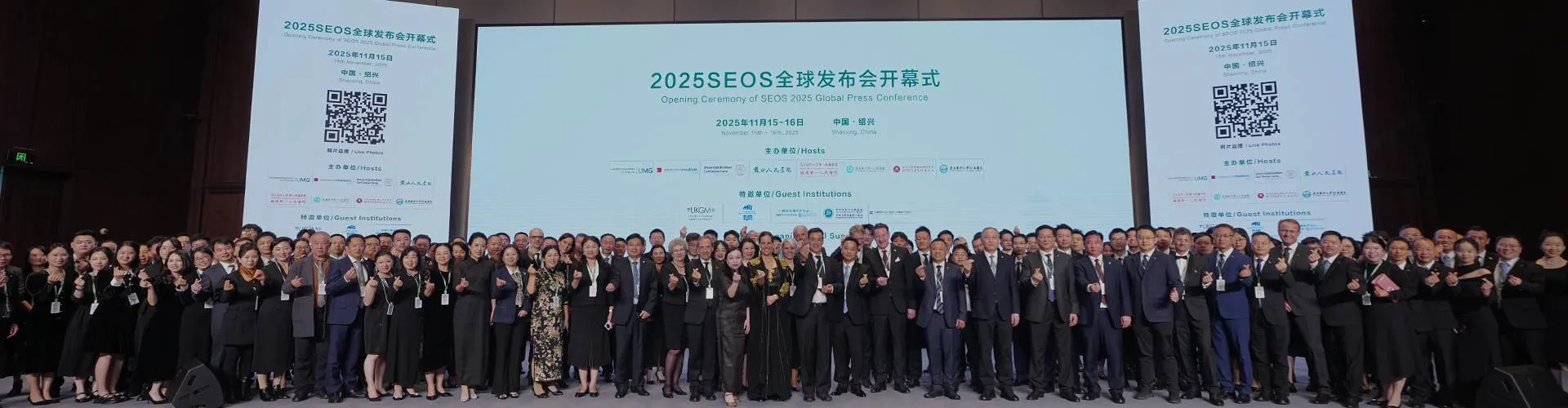


The 4th Sino-Euro Global Forum on Hospital Management, Specialty Construction & Talent Cultivation
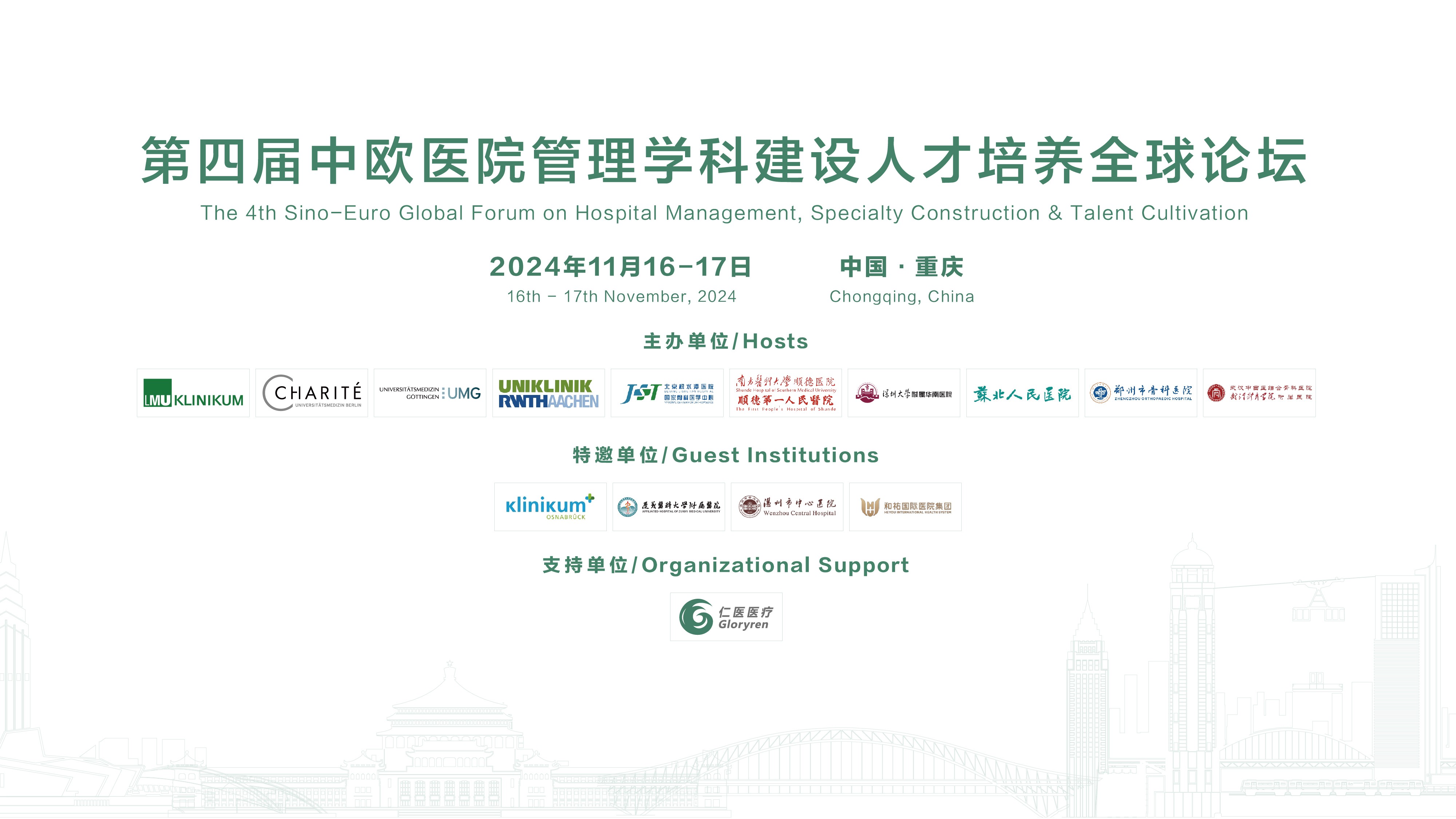
November 16-17, 2024
Conrad, Chongqing
01
Pre-meeting of Panel Members for SEOS 2024
Nov. 16th 17:00-18:00
02
Welcome Banquet of the SEOS 2024 Global Press Conference
Nov. 16th 18:00-21:10
03
The 4th Sino-Euro Global Forum on Hospital Management, Specialty Construction & Talent Cultivation
Nov. 17th 8:30-11:45
04
Global Live
Bilingual Simultaneous Interpretation in English and Chinese
Hosts
University Hospital of Munich, Charité -Universitätsmedizin Berlin, University Medical Center Göttingen, Uniklinik RWTH Aachen, Beiling Jishuitan Hospital, Shunde Hospital of Southern Medical University, South China Hospital of Shenzhen University, Northern Jiangsu People’s Hospital, Zhengzhou Orthopaedic Hospital, Wuhan Orthopaedics Hospital of Integrated Traditional Chinese and Western Medicine (The Affiliated Hospital of Wuhan Sports University)
Guest institutions
Osnabrück Hospital, Affiliated Hospital of Zunyi Medical University, Whenzhou Central Hospital, Heyou International Health System
Organizational Support
Guangzhou Gloryren Medical Technology Co., Ltd
Question List for 4th Sino-Euro Global Forum on Hospital Management, Specialty Construction & Talent Cultivation
Session 1: Hospital Management
Chairs: Prof. Stief, Prof. SHEN Jie
Panel Members: Prof. Hatz, Prof. Marx, Prof. SHU Yusheng, Prof. WU Song
Wrap-up: Prof. SHU Yusheng
1. What does the success of the “Sanming Model” medical reform mean to China’s healthcare system?
2. After implementing China’s National Centralized Drug Procurement Policy, many pharmaceutical enterprises have stopped supplying some specific drugs due to price factors. What is the impact on patients with special medication needs?
3. In China, inpatients need to pay a deposit when handling admission procedures. Even if admitted for the same disease, the admission deposit in different Grade Three Class A hospitals varies greatly, usually ranging from 2,000 CNY to 10,000 CNY (ca. 250-1250 euros). Why is there such a difference? Will excessive hospital deposit limit some patients’ access to hospitalization treatment at the appropriate time point?
4. How to deal with potential conflicts of interest and inconsistencies in concepts among employees of different levels and occupational groups (such as hospital executives, administrative departments, clinical department chiefs, and front-line medical staff)?
5. How to ensure the consistent delivery of high-quality healthcare services amidst increasing patient volumes?
Session 2: Specialty Construction (Orthopedics and Trauma Surgery)
Chairs: Prof. Stöckle, Prof. WANG Manyi
Panel Members: Prof. Hildebrand, PD. Grim, Prof. MEI Wei, Prof. LI Xugui
Wrap-up: Prof. MEI Wei
1. Adaptation to demographic changes: What challenges does the aging society bring to different sub-specialties of orthopedics and trauma surgery ? How to deal with them?
2. Trauma Network: Prof. Wang and Prof. Stöckle, please briefly introduce the setup of the trauma network in China and in Germany. What are the advantages and disadvantages of the two systems?
3. Health equity and access to care: How to provide patients living in underdeveloped areas with the same quality of healthcare as those in big cities? Can the success of the model of the trauma network model be generalized to other sub-specialties in orthopedics?
4. Training of the next-gen: How is technology (e.g., simulation, virtual reality, online courses) being utilized to enhance the training of young surgeons?
5. Research Priorities: What are the current research priorities in your department, and how are these aligned with national and international trends?
Session 3: Talent Cultivation
Chairs: Prof. Bähr, Prof. SHEN Shurong
Panel Members: Prof. Giunta, Prof. Hagl, Prof. YU Changyin, Prof. LIU Xiaofang
Wrap-up: Prof. Giunta
1. Talent Recruitment: When recruiting doctors who have returned from overseas, many hospitals use whether the applicant has studied in a university ranked in the top 100 or even the top 50 of QS as the recruitment standard. Is it reasonable to refer to the ranking of third-party commercial company in talent recruitment? What are the recruitment standards that should be referred to?
2. Talent Retention: What are the effective retention strategies? How do salary, work-life balance, and professional development opportunities play a role?
3. Research-clinic Balance: What opportunities are available for young doctors to engage in research while managing their clinical duties? Are there specific programs or structures in place in your department to support this balance?
4. Gender Gap in Career: There is still gender disparity in the field of medicine especially in the field of surgery. In 2019, the Surgical Branch of the Chinese Medical Doctor Association released a survey report on the current status of female surgeons in China, which showed that women accounted for 6.04% of the total number of surgeons. How well do you think university hospitals in Germany and in China are doing to encourage more women to pursue a career in medicine, and how could this be improved?
5. In addition to the clinical expertise and research skills, how to develop the soft skills of the young doctors, for example, work ethics, leadership, doctor-patient communication and mindset?