



For this episode, Gloryren has the honor to invite Prof. Boriani, World-class Master for Spinal Tumor who had developed WBB staging system, Director of Spinal Teaching Program and Head of Spine Tumor Surgery of the GSpine4 Spine Surgery Division IRCCS Istituto Ortopedico Galeazzi Milan. In the interview. Prof. Boriani shared with us his stories of early life, the development and application of the WBB staging system and his experience in performing en bloc resection, ect.
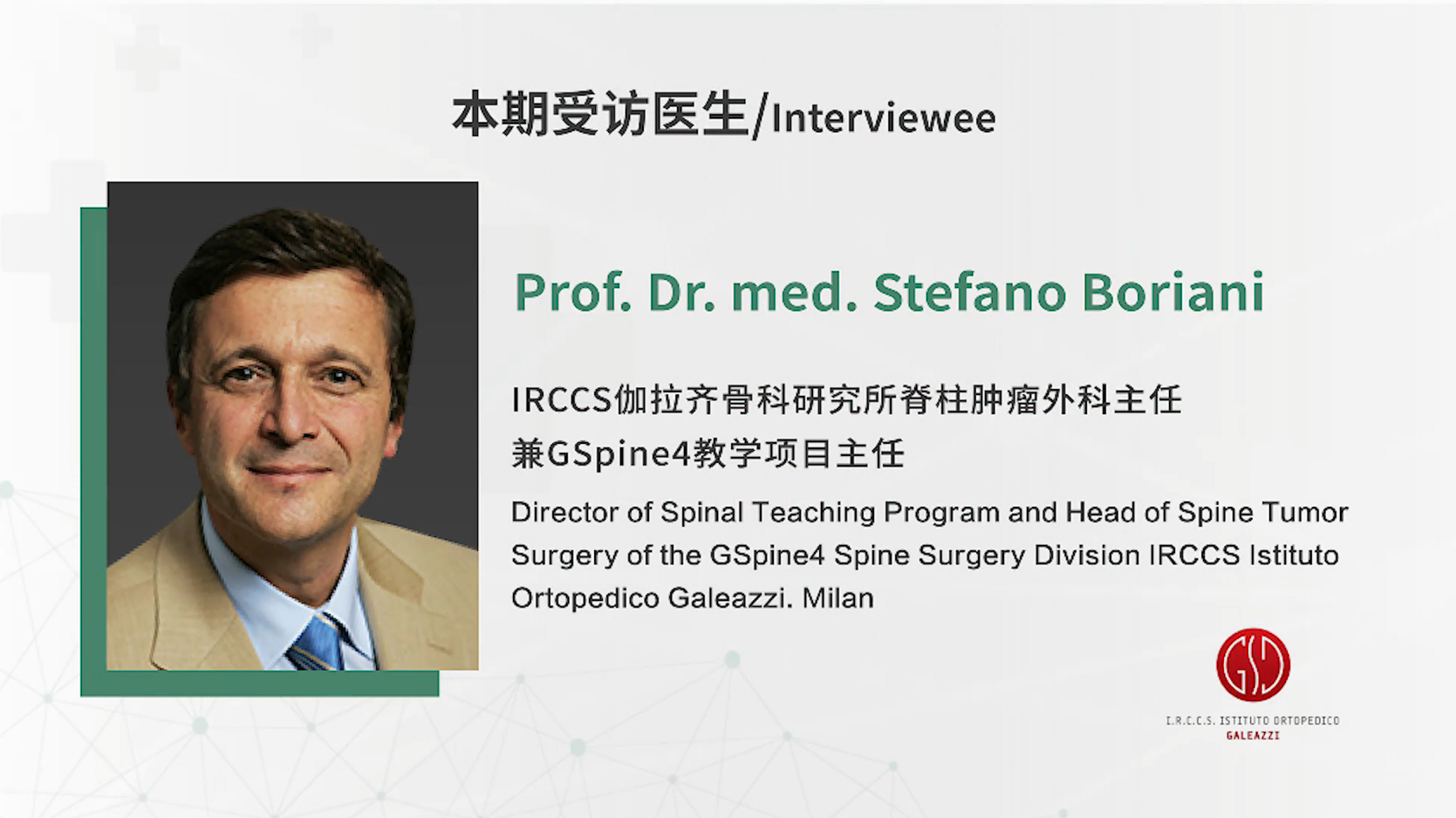
1. How did you become interested in taking up spine tumors as your carrier when most of the spine surgeons avoid managing this condition? What made to take such an interest in this field?
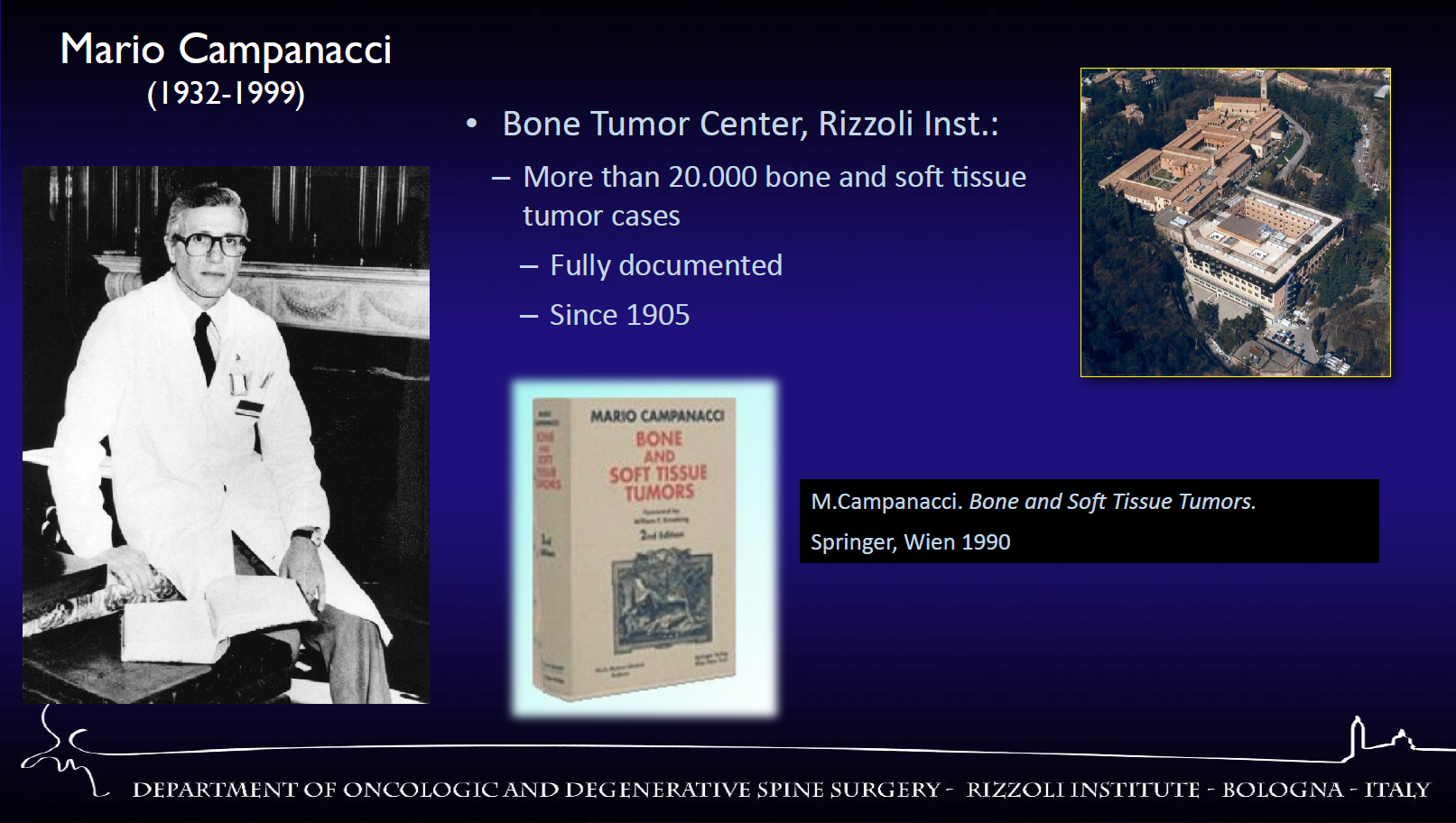
This is a very interesting question as it has me to go back to the beginning of my activity. I was born and I studied in Bologna, which is the site where the most important institution of Orthopedics was founded in 1896. It is Istituto Ortopedico Rizzoli. This center has been and is still the most important referral center for bone tumors. And more than 20,000 cases have been recorded since 1905.
So I entered in this institution as a student in 1974, and since that time I had the opportunity to have Prof. Campanacci as a mentor. Prof. Campanacci was an orthopedic surgeon but also a pathologist. And he was interesting in bone tumors and he wrote one of the most important textbooks on this topic.
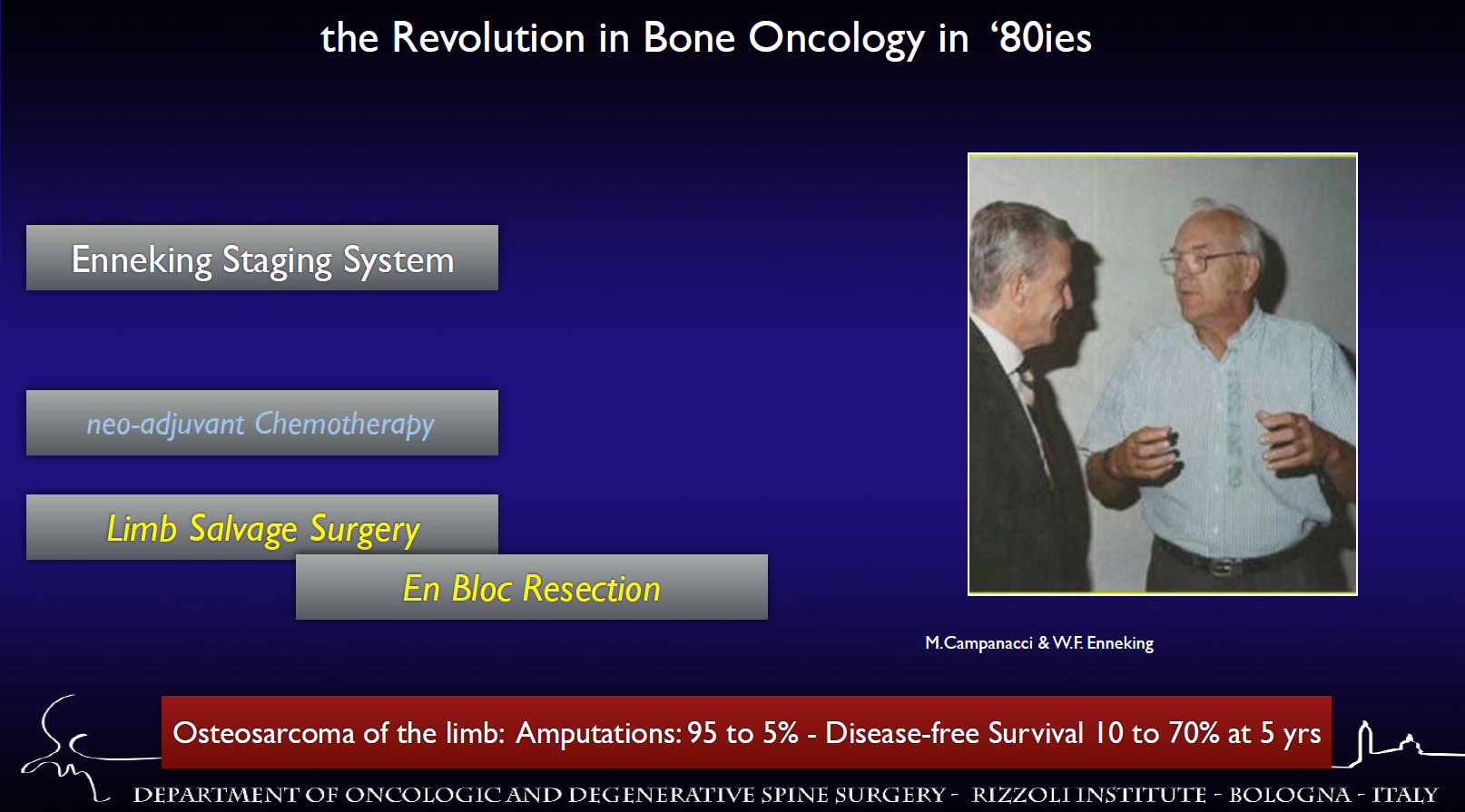
Prof. Campanacci was involved in the great evolution in the treatment of bone oncology together with Enneking. And the result of the combination of these expertise brought to great successes. For example, the reduction of amputation rate in osteosarcoma of the limb and the disease-free survival improved from 10% to 70%.
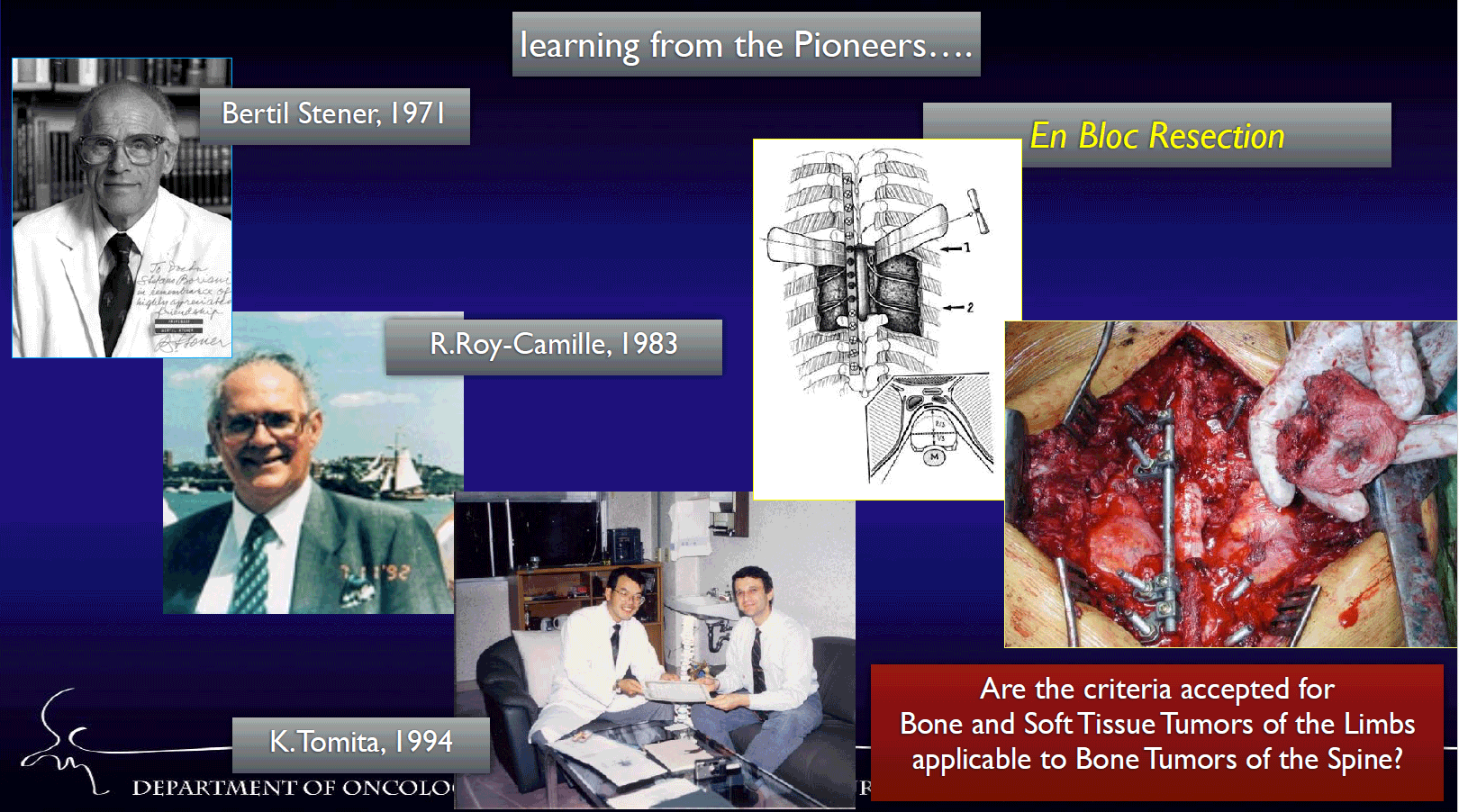
So my life changed completely the day which I think was in the spring of 1984 when Prof. Campanacci invited me in his office, and told me, “Stefano, I think that we should study if the criteria accepted for bone and soft tissue tumor of the limb are applicable to bone tumor of the spine.” This was the day which changed all my life, and since that day I started to work on this subject. And today I have collected more than 2,000 cases and dedicated all my life to working on this subject.
2. Is there anyone who affects you most in your study or professional career? If so, who’s he (she) and how did he (she) affect you?
This is also a very important question as it includes not only professional point but also some points which concern my intimate life.
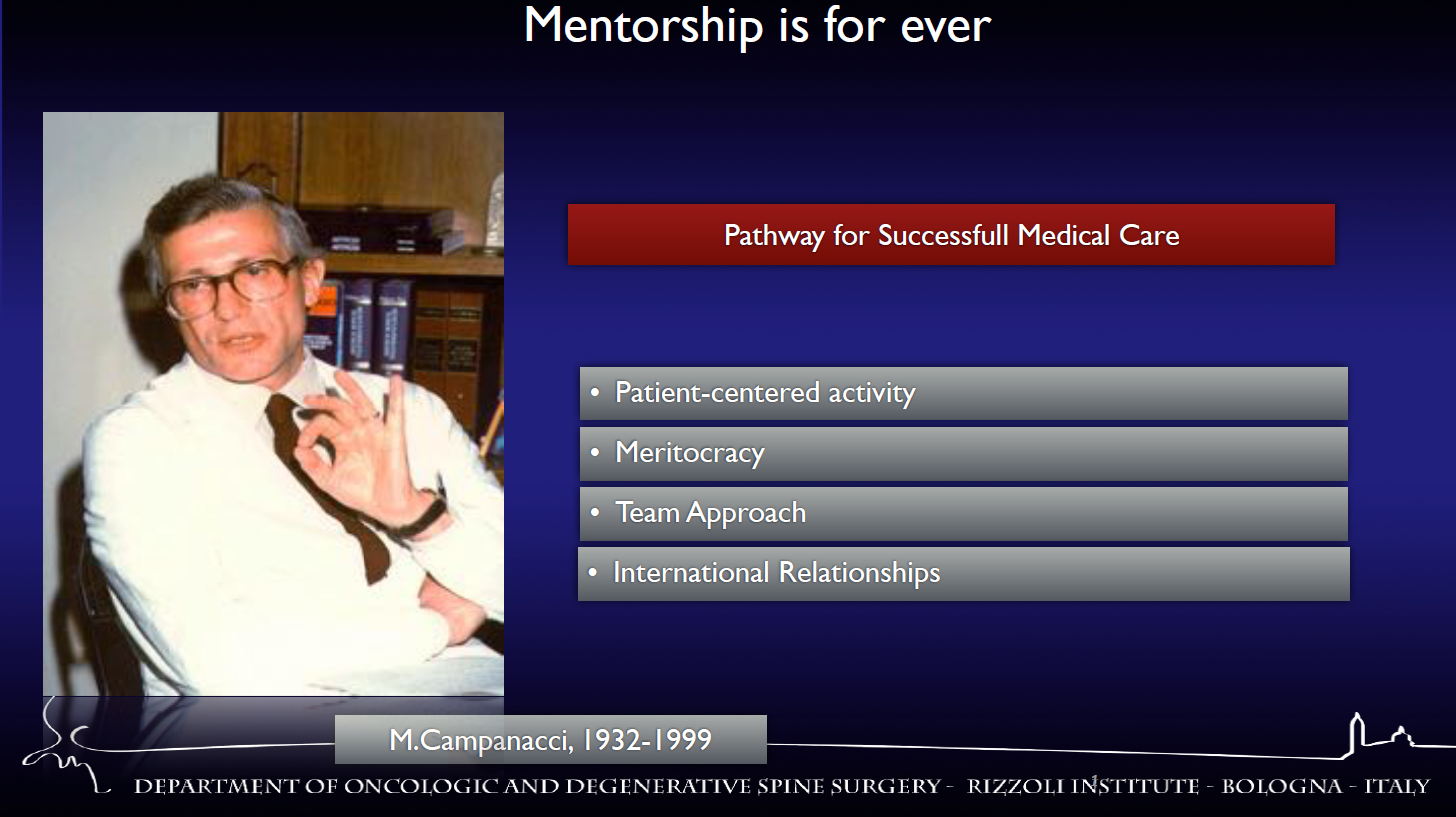
As you know what is important for a doctor is to have a mentor. My mentor was Prof. Campanacci. What is important, the important role of a mentor is that the sentences and the leading idea that are in the mind remain all the life. For example, he always reminded that the pathway for successful medical care is the patient-centered activity, meritocracy, team approach and international relationships.
These are generally leading ideas that remain in the mind all over my life. For example, team approach for bone tumor in the spine includes these points: that should be a multidisciplinary decision-making process with careful studies, multidisciplinary treatment; the surgical plan should be following to oncological principles; and neurological function and spine alignment and stability must be preserved.
The role of a mentor is to remind always that common sense is very wise and this is a sentence that I always remind every time I have to decide something. It’s very simple, “when you have to decide a treatment, you should avoid a too shy treatment, unable to get the result, but avoid also a too aggressive treatment, exposing the patient to unnecessary morbidity... ” So my mentor pushed me to study this activity and he rested also in my mind with this sentence and this idea.
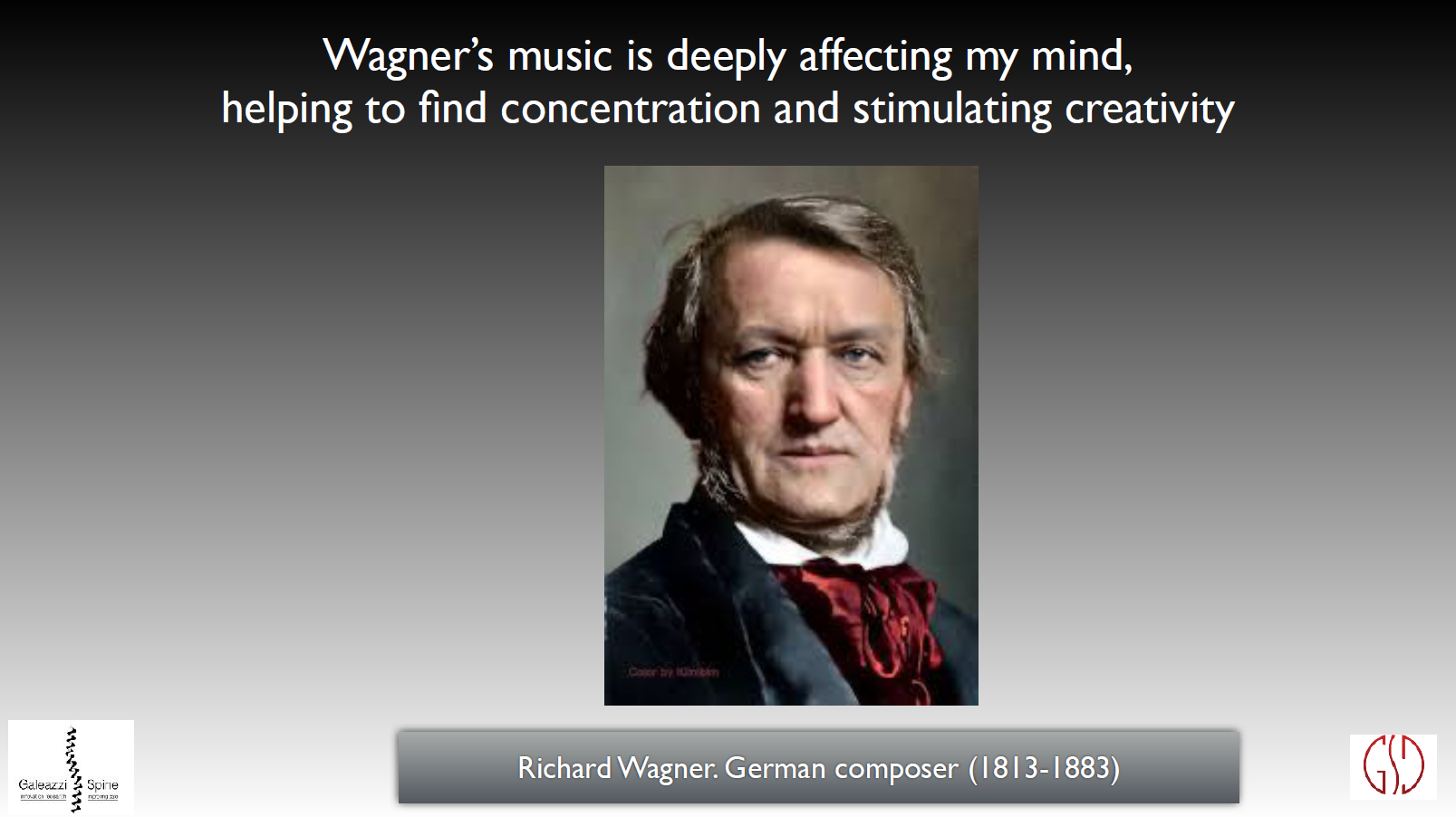
There is something that should help everyday. For example, the music which is helpful to find concentration and stimulate creativity. I like so much, for example, Richard Wagner, which was a German composer.
But it is also very useful to have home somebody who is tolerating, that is thinking the patient everyday and I think planning surgery. It is very important to have a family, the warmth of a family is very helpful to maintain concentration and to work at the best for the patient care. So I must acknowledge to my wife, Loredana, to my cats, to help me in every day rest and in the best to find the concentration for my difficult job.
3. During the past time, the treatment for spine tumor was not so specific, so how did you make some breakthroughs to solve this problem?
So you are fully right. When Prof. Campanacci asked me to find the best solution for the treatment of tumor, this was what we can do for any kind of tumor, just intralesional excision was done with very bad result. There was no different activity, all the tumors both benign and malignant had to be treated by the same intralesional approach, which was disastrous for malignant tumors.
In the early 80s, there were some attempts to perform en bloc resection, but it was not performed according to oncological appropriateness. So the result was not so satisfactory as the patient had a local recurrence and died.
The new strategy was to apply to the spine the same criteria used for the limb. And the first point is the concept of “en bloc resection” which means to remove the tumor together with the continuous shell of healthy tissue, which is so-called the margin. And the thickness of the healthy tissue that we can leave around the tumor must qualify the oncological validity of the procedure. But for anatomical reason, it is very difficult to perform en bloc section in the tumor of the spine due to the anatomical problems.
So I decided to start learning from the pioneers of this surgery. The first who applied to the spine oncological criteria was Bertil Stener, a Swedish surgeon who performed two en bloc sections in the spine in 1971. Later on R.Roy-Camille and K.Tomita tried to find the surgical technique able to resect en bloc vertebrae. So I started working with these great pioneers in order to find my way to perform en bloc resection in the spine.
But the real key to understand which is the best treatment is staging, is to decide which is the best kind of resection according to the aggressiveness of the tumor. This was the proposal of Enneking Staging System and based on the staging, it was to be decided the margin. So one of my first relevant papers was the application of the spine of the Enneking Staging System. We published this paper in 1997 and this is the basis to decide the best treatment in bone tumors in the spine.
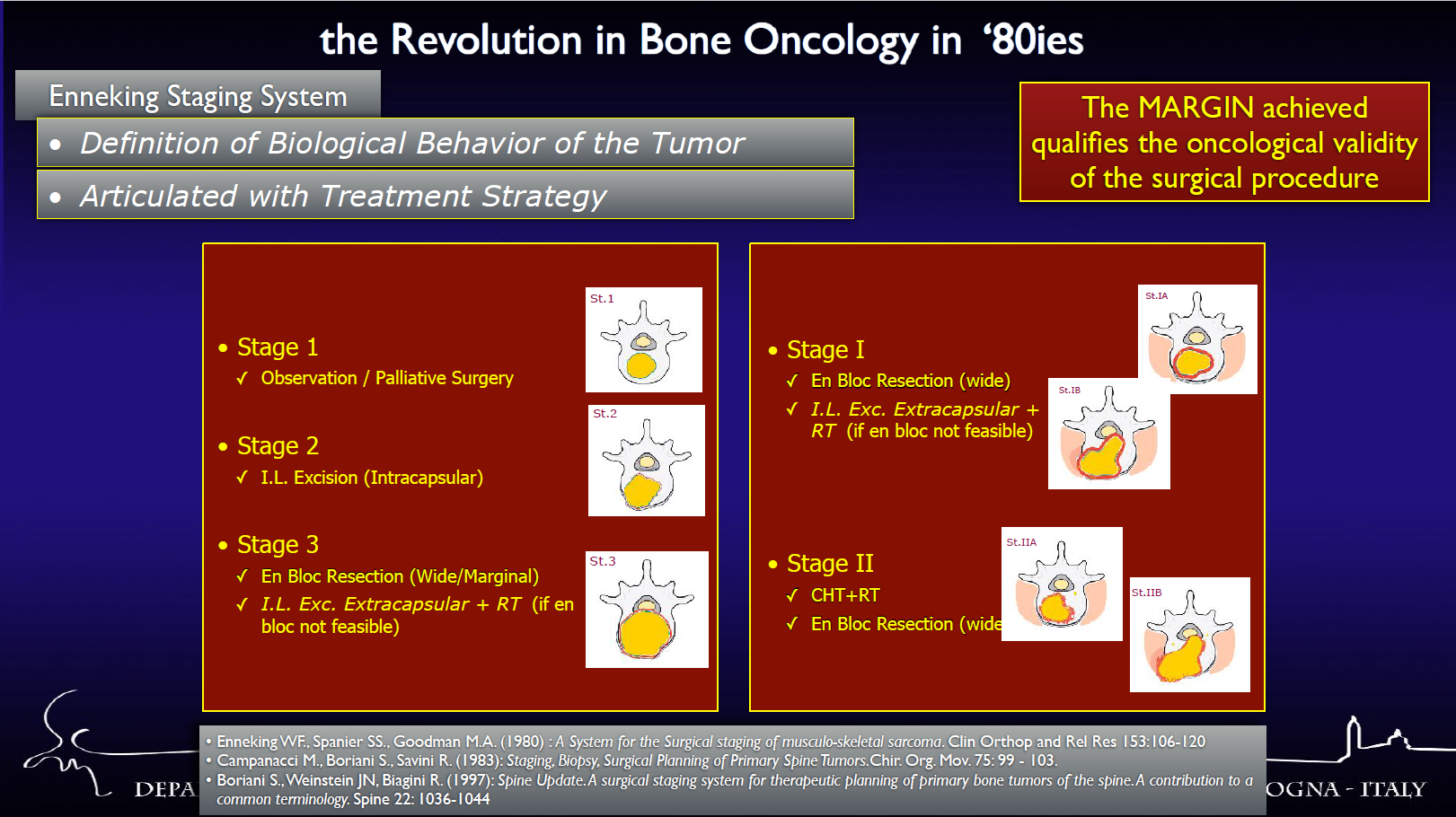
So by understanding and classifying the biological behavior of the tumor, we can decide the treatment strategy. I think this was an important contribution to understanding how to treat this tumor. So this is the way we are following and since this point we started with our job.
4. It’s known that you did an En-bloc surgery for treating spine tumor at the age of 39, what kind of impact or influence this kind of approach has brought to the treatment of spine tumor?
We started performing en bloc resection in a low grade malignant tumor, for example, a chordoma. It is a chordoma on L3, which we did the en bloc resection for the first time. It was done on October 25 in 1991 and I was at the age of 39. I arrived to this point after promoting the staging system by Enneking and after going all around the world to see the other people that performed this surgery.
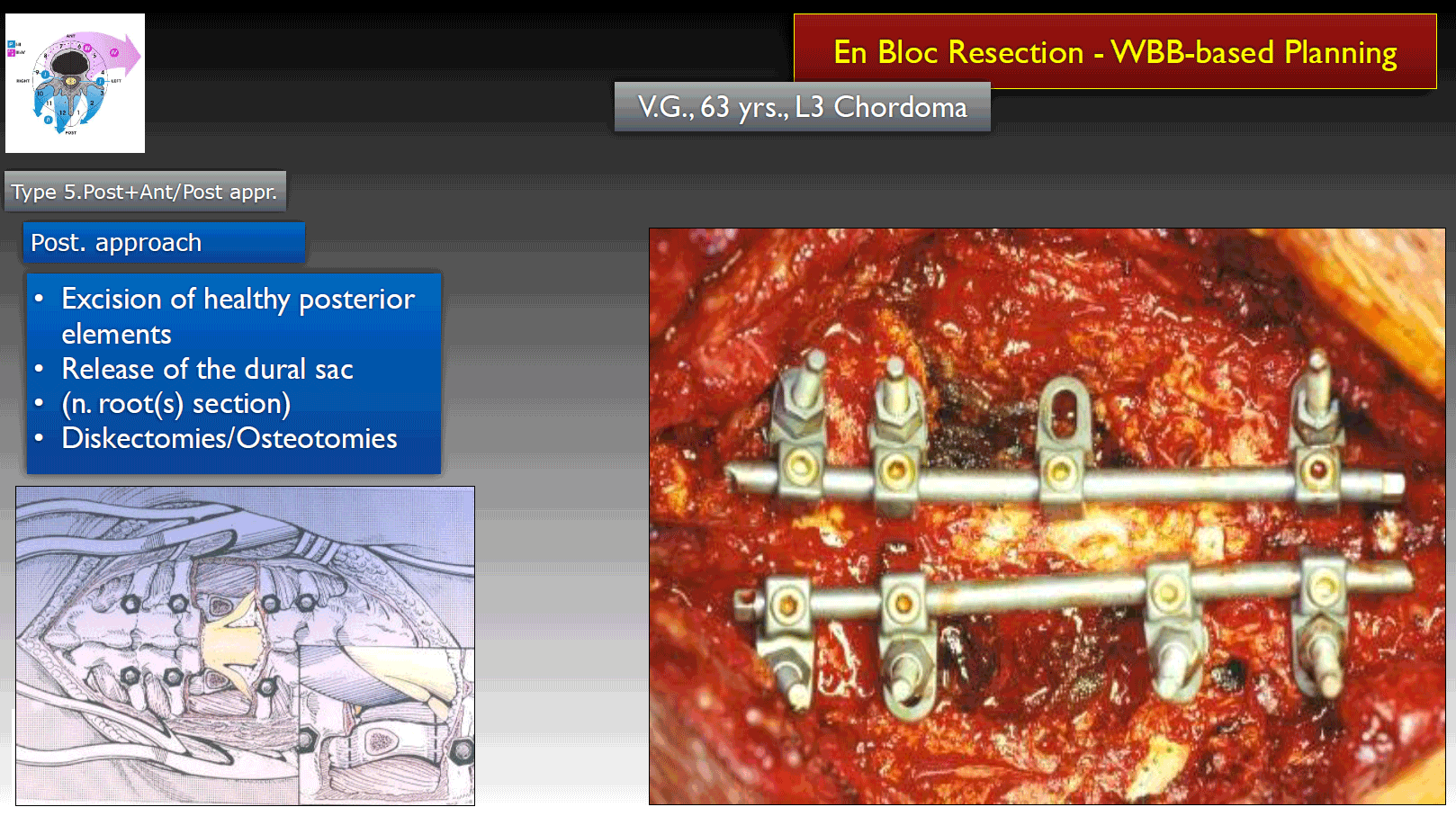
An old style of fixation performed in the first en bloc resection surgery
So we concluded the en bloc resection by removing the tumor with a good margin. It was a very successful surgery that the patient survived without any problems for 8 years and died for another disease.
We did another case a few months later with more difficult chordoma on L5. We had to achieve a full en bloc resection, we did perform three approaches, first anterior and then posterior and we concluded with another anterior approach. This was a very successful surgery with good margin all around the chordoma. The patient is surviving after 24 years without any evidence of disease. This is a good demonstration that if we have applied staging and the correct oncological treatment we can achieve excellent result. So the important point is the role of margin as our further studies.
As indicated that if we have applied Enneking appropriate surgery, we have 7% of local recurrence and if the Enneking staging system is not applied, the local recurrence rate is about 10 times higher.
This was a study from Prof. Fisher, which was demonstrating the same. This study promoted and confirmed that Enneking appropriate treatment is associated with the statistically significant result on local recurrence rate and on mortality.
Later we performed several studies on single histology. For example, this was the result of 95 cases of chordoma on the spine. The result of the study is that en bloc resection is associated with the best result but the local recurrence rate is still not fully satisfactory. The results are better with chondrosarcoma where en bloc resection with the good margin is always associated with excellent local control and survival of the patient.
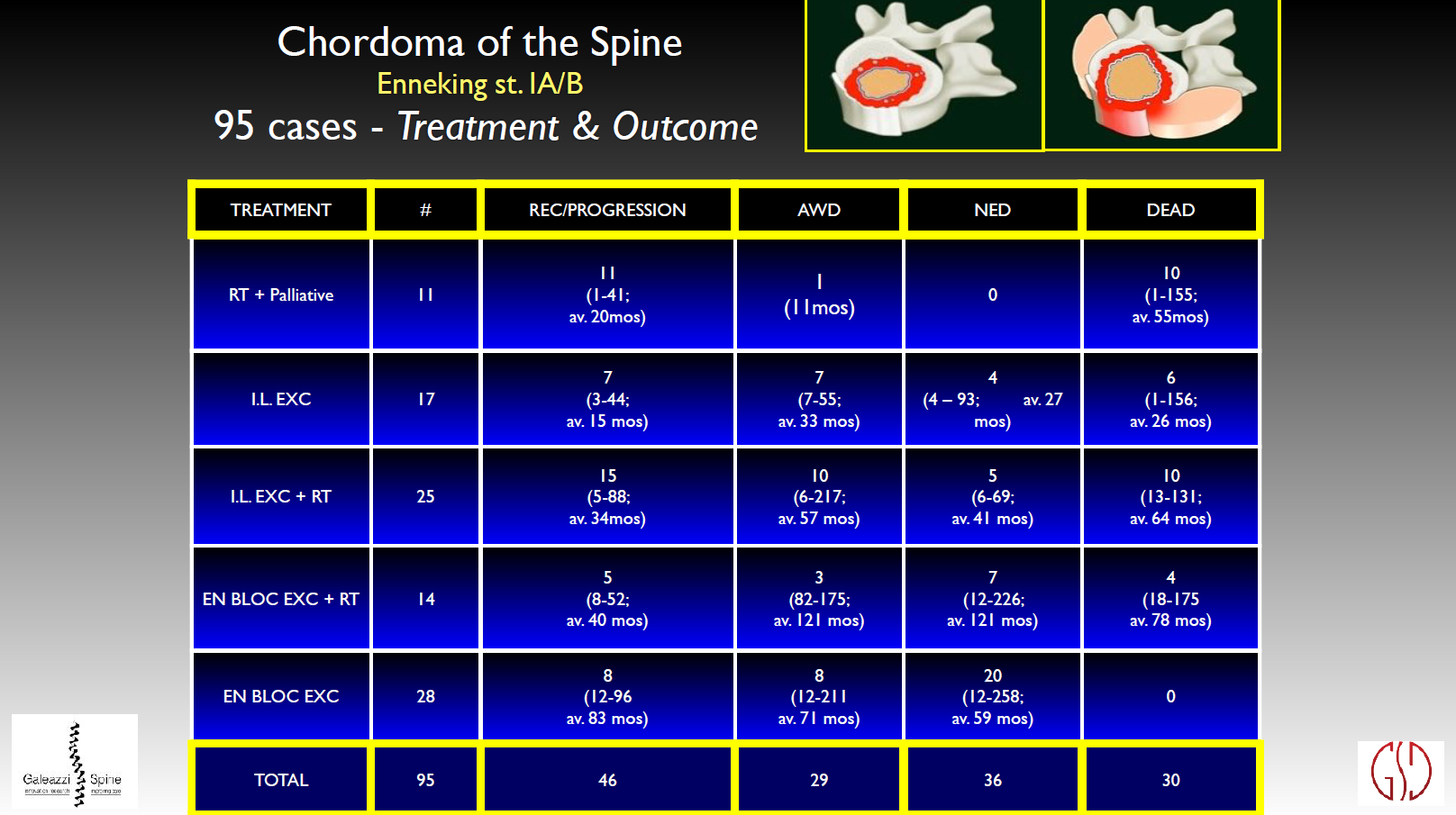
So my contribution to the literature was not only on promoting the surgical technique, but also understanding the revolution in the times of this technique.
Our conclusion is that if in a case of chordoma like this, if it is performed intralesional excision instead of en bloc resection. The result will be very bad. And the intralesional treatment which doesn’t respect the oncological principles will end in local recurrence. And the real problem is that after the first local recurrence, even if we perform en bloc resection we can not save the patient’s life. The local recurrence was treated by en bloc resection, but even en bloc resection could not save the patient as more local recurrence and the death followed with in this case.
So a sentence that I always repeat is that the first treatment is the one would decide the patient survival and the patient evolution. So those who want to start to work on tumors have the great responsibility, as the first decision is the one will affect the final prognosis.
5. Nowadays, WBB classification created together by you and your colleagues is widely used in today’s spine tumor treatment, and how it has revolutionized the management of vertebral column tumors? And some new and uncertain cases of spine tumor may appear in the future, in this regards, is it necessary to perfect the existing WBB classification in case of the new cases? How wo